
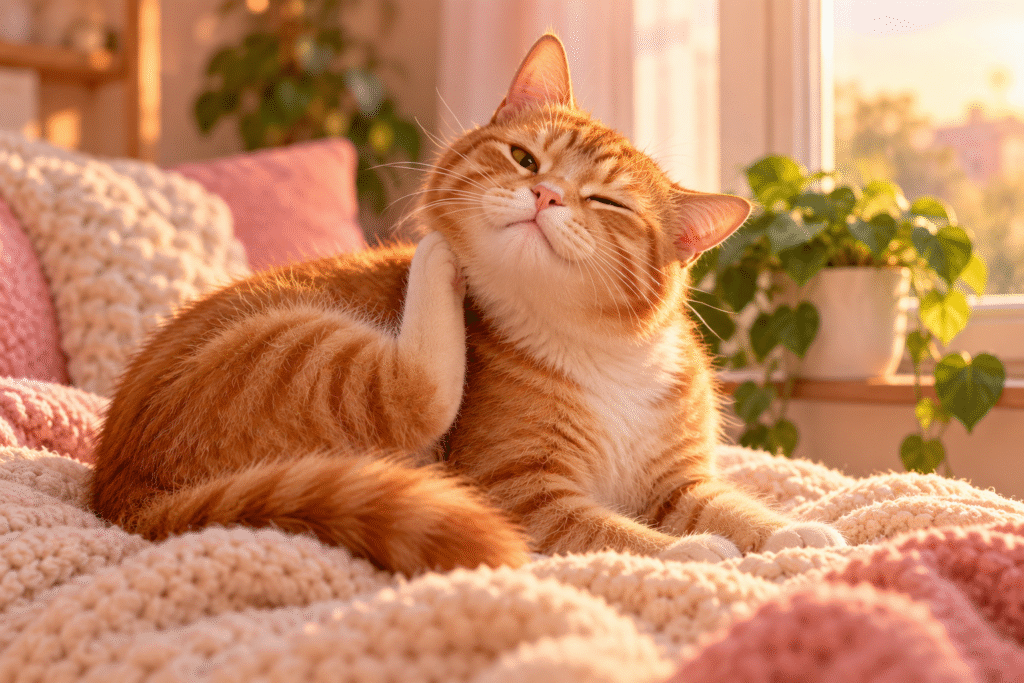
Your cat has been scratching the same spot behind her ear for weeks. The fur is thinning. You’ve tried flea treatment, changed the litter, even swapped her bed. Nothing helps.
The answer might be sitting in her bowl.
Cat food allergies are easy to miss because they don’t look like allergies. There’s no sneezing fit, no watery eyes. Instead, your cat itches, licks, vomits, or starts avoiding the food she used to love. Owners often spend months treating the symptoms before anyone thinks to question the food.
Here are 9 signs of food allergy in cats, what they actually look like at home, and what to do if you spot them.
What Is a Cat Food Allergy?
A food allergy happens when your cat’s immune system decides a normal ingredient is a threat. It fights back, and the fallout shows up on the skin and in the gut.
Here’s the part that surprises most owners: cats almost always react to food they’ve eaten for a long time. Allergies build up over months or years. So “but she’s eaten this since she was a kitten” isn’t proof it’s safe. It’s often the opposite.
It’s also not the same as a food intolerance. An intolerance is a digestion problem, like a cat who can’t handle cow’s milk. An allergy is an immune reaction, and it usually brings itching along with the tummy trouble.
The usual culprits are proteins, not grains. Beef, fish, chicken and dairy top the list. Grain-free food is heavily marketed to UK cat owners, but wheat allergies in cats are fairly rare.
9 Warning Signs of Food Allergy in Cats
1. Itching that never stops
This is the big one. An itchy cat with no fleas is a food suspect. Watch for scratching around the head, face, ears and neck — that pattern is classic. Flea allergies hit the back and tail base instead.
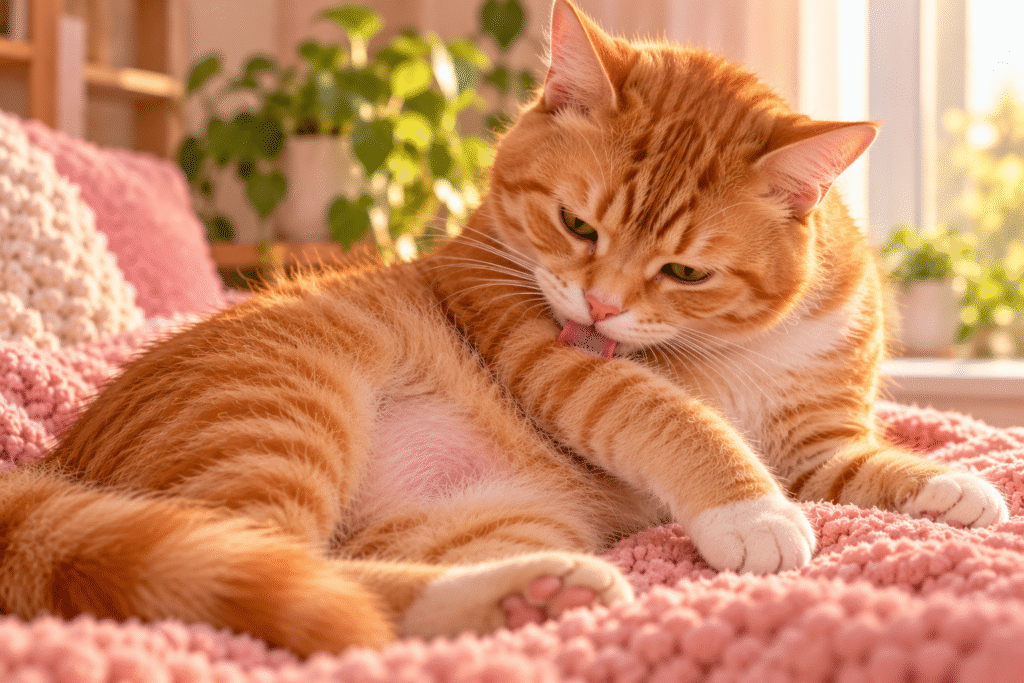
2. Over-grooming and bald patches
Cats groom when they itch. You may never catch her scratching, but you’ll see the result: thin fur on the belly, inner legs or flanks. Some cats lick one spot until it’s completely bare.
3. Scabs and sores on the skin
Small crusty bumps, often around the neck and shoulders. Vets call these miliary dermatitis. They feel like grains of sand under the fur. Broken skin can turn into an infection, so this one needs a vet.
4. Red, inflamed ears
Repeat ear problems with no mites behind them often trace back to diet. The ears look pink inside, feel warm, and your cat shakes her head or digs at them with a back paw.
5. Vomiting after meals
Not the odd hairball. We mean regular sick-ups, often within a few hours of eating, happening week after week.
6. Loose stools or diarrhoea
Soft, smelly or urgent poos that keep coming back. Some cats also go more often than usual, or start missing the tray.
7. Excess wind and a gurgly tummy
A gassy cat isn’t normal. If you can hear her stomach churning from the sofa, her food may not agree with her.
8. Weight loss or a dull coat
An irritated gut struggles to absorb nutrients. Over time your cat may drop weight, look scruffy, or lose the shine from her coat even though she’s eating fine.
9. Low energy and a change in mood
An uncomfortable cat hides, sleeps more, plays less, or gets snappy when handled. Owners often put it down to age. Sometimes it’s the food.
What to Do If You Spot These Signs
First, don’t start swapping foods on your own. If you change the diet before seeing your vet, you muddy the picture and make the real trigger harder to find.
Step 1: Book a vet visit. Fleas, mites, ringworm and thyroid problems cause the same symptoms. Your vet rules those out first.
Step 2: Run an elimination diet. This is the only reliable way to diagnose cat food allergies. There’s no blood or skin test that gets it right. Your vet puts your cat on a food with one protein she has never eaten, or a hydrolysed diet where the protein is broken down too small for the immune system to notice.
Step 3: Stick to it for 8 to 12 weeks. Nothing else. No treats, no dental sticks, no licking the gravy off your plate. One cheat can reset the whole trial. If you have other cats, feed them separately.
Step 4: Reintroduce the old food. If the symptoms come back, you have your answer. It feels backwards to make your cat itchy again, but this step is what confirms it.
Feeding an Allergic Cat Long Term
Once you know the trigger, managing it is mostly about reading labels.
- Check the full ingredient list, not the front of the pack. “With salmon” often means there’s chicken in there too.
- Watch out for “meat and animal derivatives“. This vague wording is common on UK pet food and tells you nothing about the protein inside.
- Treats count. Most relapses come from treats, not meals.
- Change food slowly. Mix the new food in over 7 to 10 days so you don’t upset her stomach.
Most allergic cats do perfectly well once the trigger is out. You’re not managing an illness forever, just shopping a bit more carefully.
Frequently Asked Questions
How long before I see an improvement? Skin is slow. Gut symptoms often settle within two weeks, but itching can take the full 8 to 12 weeks to clear.
Can a kitten have a food allergy? Yes, though it’s less common. Allergies usually appear between one and six years old.
Is grain-free food the answer? Usually not. Cats react to proteins far more often than grains, so a grain-free chicken food won’t help a cat allergic to chicken.
Can my cat suddenly become allergic to her usual food? Yes. This is the most misunderstood part of cat food allergies. Long exposure is what causes them, so a lifelong favourite is a very likely suspect.
The Bottom Line
One of these signs on its own probably isn’t much. Three or four together, dragging on for weeks, is worth a conversation with your vet.
Food allergies in cats are frustrating to pin down, but they are fixable. The cats who suffer longest are the ones whose owners kept treating the itch instead of the cause.
If your cat is ticking boxes on this list, write down what you’ve noticed and when it started, then book that appointment. You’ll be glad you did, and so will she.
This article is for information only and isn’t a substitute for veterinary advice. Always speak to your vet about your cat’s symptoms.