Introduction
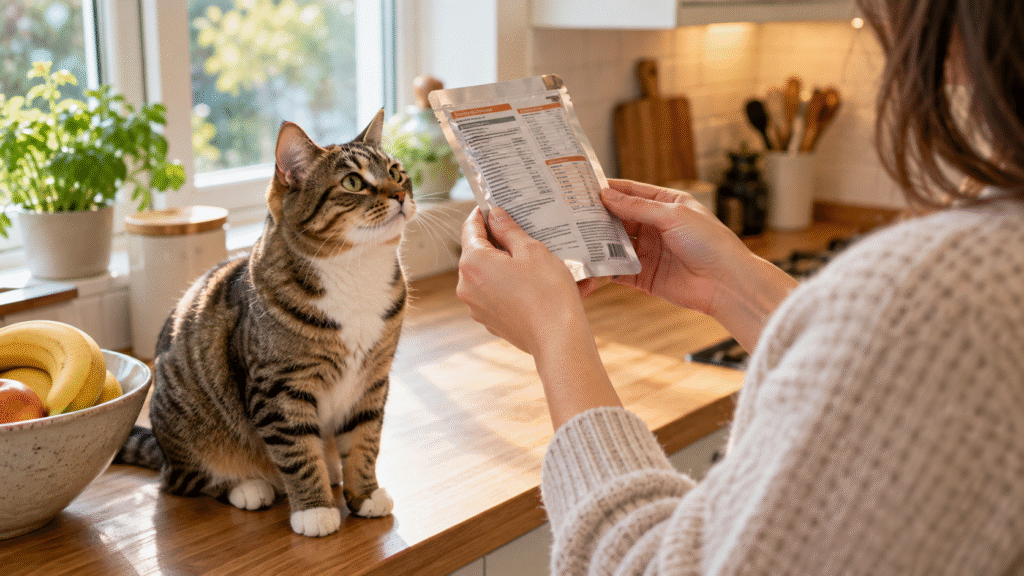
Be honest. When you pick up a pouch of cat food, how long do you actually spend reading the back of it? If you’re like most of us, it’s about two seconds. You check the flavour, maybe the price, and into the basket it goes.
I get it. Cat food labels are not written for normal people. They’re full of long words, odd phrases and numbers that seem to mean nothing. But the truth is, the label tells you a lot about what your cat is really eating. Once you know a few key cat food ingredients, it gets much easier.
So grab a tin from the cupboard and read along. By the end of this post, you’ll know exactly what you’re looking at.
First, How a Cat Food Label Works
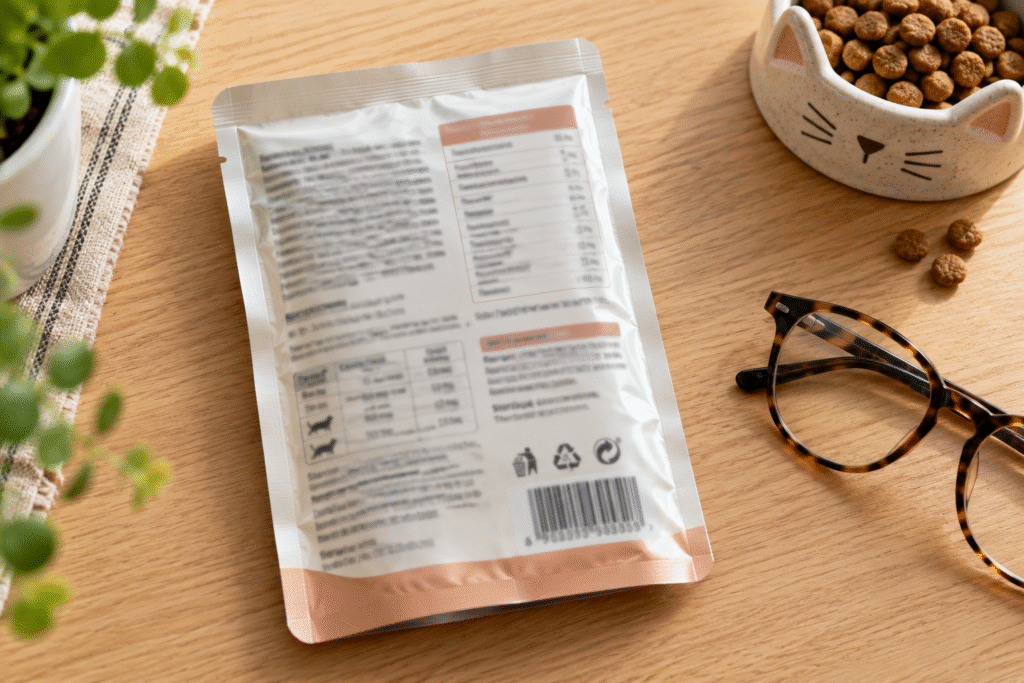
Before we get to the ingredients, there are three things worth knowing about how labels are laid out in the UK.
The order matters. Ingredients are listed by weight, from most to least. So whatever comes first makes up the biggest part of the food. If meat is first, that’s a good sign. If a cereal is first, the food is mostly cereal.
“Complete” or “complementary”. A complete food has everything your cat needs to stay healthy on its own. A complementary food, like many treats and some toppers, does not. If you feed a complementary food, it should only be part of the diet.
The name tells you how much meat is inside. “With chicken” usually means only around 4% chicken. “Rich in chicken” means more. “Chicken flavour” might mean very little chicken at all. It’s sneaky, but now you know.
10 Cat Food Ingredients to Understand
1. Meat and Animal Derivatives
This is probably the most common phrase you’ll see, and the most confusing. It simply means meat and other parts of an animal. That can include muscle meat, but also things like liver, kidney, heart and lung. Organ meat is actually very nutritious for cats. The only problem is that the phrase is vague, so you don’t know which animal or which parts are used.
2. Named Meat (Chicken, Turkey, Salmon)
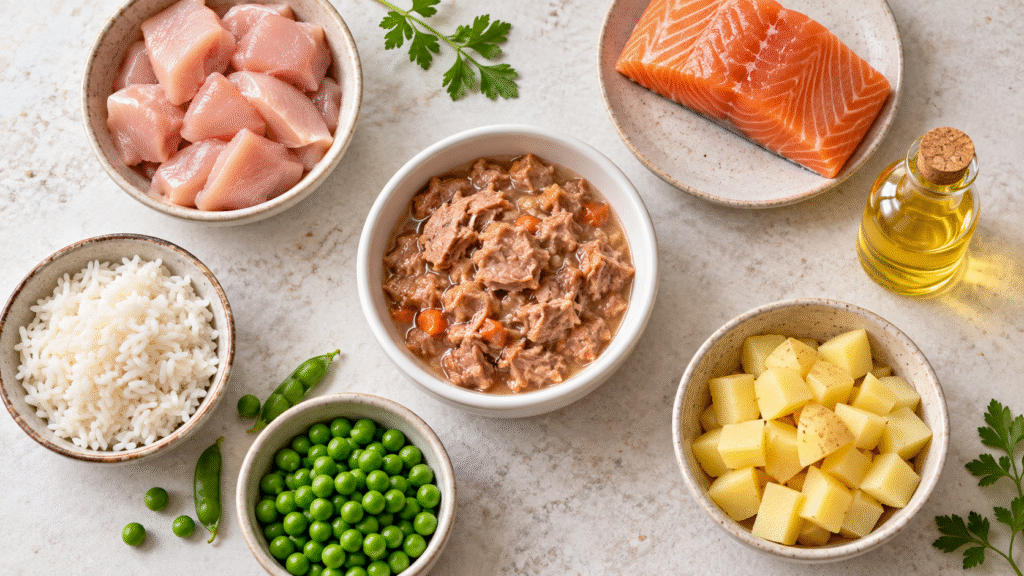
When a label says “chicken” or “salmon” instead of “meat and animal derivatives”, you know exactly what you’re getting. Cats are obligate carnivores, which means they need meat to survive. A named meat near the top of the list is one of the best things you can see.
3. Dried or Dehydrated Meat
You’ll often see this in dry food, for example “dried chicken protein”. It sounds less appealing than fresh chicken, but it’s not a bad thing. Fresh meat is mostly water, so it shrinks a lot when cooked. Dried meat has had the water taken out, so it can actually give more protein per gram.
4. Taurine
Taurine is an amino acid that cats can’t make enough of on their own. Without it, cats can develop heart problems and eye issues. This is why it’s added to almost every complete cat food. If you see taurine on the label, that’s reassuring.
5. Cereals
Cereals are grains like wheat, rice, maize and oats. They’re often used to add bulk and energy, and they keep costs down. Cats can digest some cooked grains, but they don’t need a lot of them. If cereals appear before any meat on the list, the food is probably more grain than meat.
6. Derivatives of Vegetable Origin
This is another vague phrase. It means parts of plants, like vegetable protein, beet pulp or other plant material. Small amounts can help with digestion. But again, it doesn’t tell you exactly what’s inside, which is why some owners prefer foods that list each ingredient by name.
7. Vegetable Protein Extracts
This is protein taken from plants such as peas, soya or wheat. It can make a food look higher in protein on paper. The catch is that plant protein isn’t as useful for cats as protein from meat. It’s fine in small amounts, but you want meat to be doing most of the work.
8. Oils and Fats
Don’t be scared of fat. Cats use it for energy, and it helps keep their skin and coat healthy. Look out for fish oil or salmon oil in particular. These contain omega-3 fatty acids, which are good for joints, skin and overall health.
9. Sugars
You might be surprised to see “sugars” or “various sugars” on a cat food label. Sometimes a small amount is used to help with texture or colour. Cats can’t actually taste sweetness, so it’s not there for them. A food without added sugar is usually a better choice.
10. Additives
This section often scares people, but most additives are there for good reasons. “Nutritional additives” are vitamins and minerals, such as vitamin D3 and zinc, that make the food complete. Antioxidants like tocopherols (a form of vitamin E) help keep the food fresh. Colourants are the one to question. Your cat doesn’t care what colour its food is, so they’re mostly there for you.
A Quick Checklist for Your Next Shop
Next time you’re in the pet aisle, run through these five quick questions:
- Is a named meat or fish one of the first ingredients?
- Does it say “complete” food on the pack?
- Is taurine listed?
- Are there lots of cereals or plant proteins near the top?
- Does it contain added sugar or colourants?
You don’t need a perfect score. No food is perfect, and every cat is different. But these questions will help you spot the good options quickly.
Final Thoughts
Reading a cat food label doesn’t have to feel like homework. Once you understand these 10 cat food ingredients, the back of the pack starts to make sense. You’ll see past the clever marketing on the front and know what’s really going into your cat’s bowl.
If your cat has a health condition or you’re thinking about a big change to their diet, have a chat with your vet first. They know your cat best.
Want more help? Read our guide on how to choose the right cat food for tips on picking a food that suits your cat’s age and lifestyle.