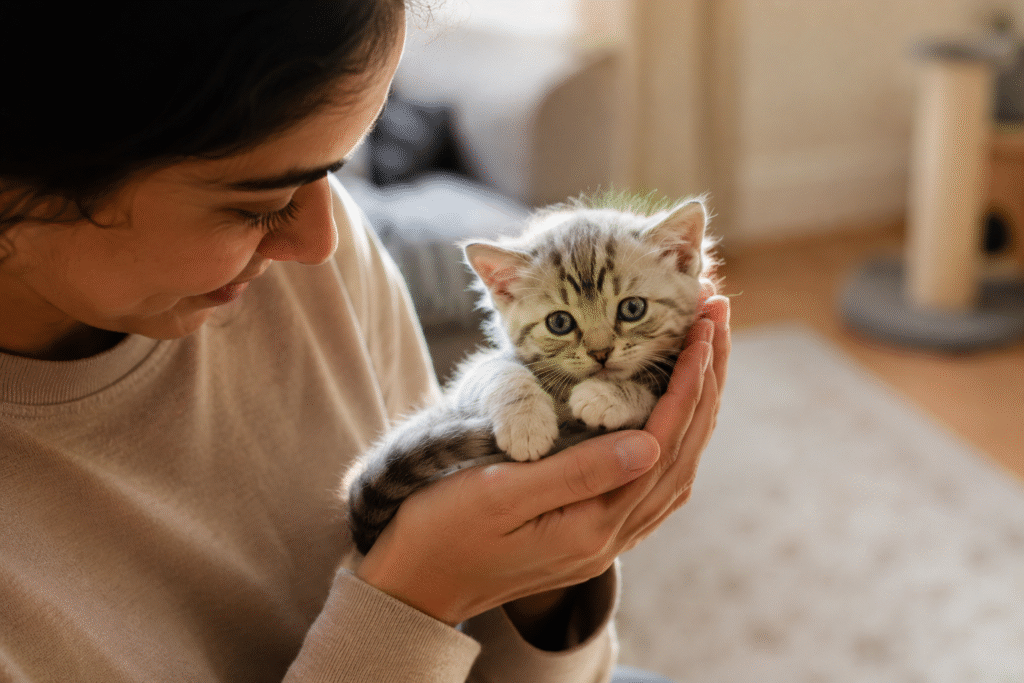
Bringing a kitten home for the first time is exciting, and it’s easy to underestimate how much prep actually goes into that first day. This new kitten checklist UK owners can lean on covers what to buy, what to set up, and what to sort out before your kitten arrives, so you’re not scrambling on the day itself.
Whether you’re adopting from a rescue, buying from a breeder, or you’ve somehow ended up with a stray who adopted you, the basics don’t really change. Here’s what actually matters.

Before Your Kitten Comes Home
Try to get everything ready a day or two ahead of time. Leaving their mother and littermates already stresses your kitten, and arriving to a half set up house just adds to that. Pick one quiet room to be their safe space for the first few days instead of letting them loose in the whole house straight away.
Ask whoever you’re getting the kitten from what food they’ve been eating. Kittens have sensitive stomachs, and a sudden diet change is one of the most common reasons new owners end up dealing with an upset tummy in week one.
Not sure which food to choose? Our guide to the best kitten food covers the seven things to look for on the label.
The Kitten Essentials Checklist
Litter and hygiene
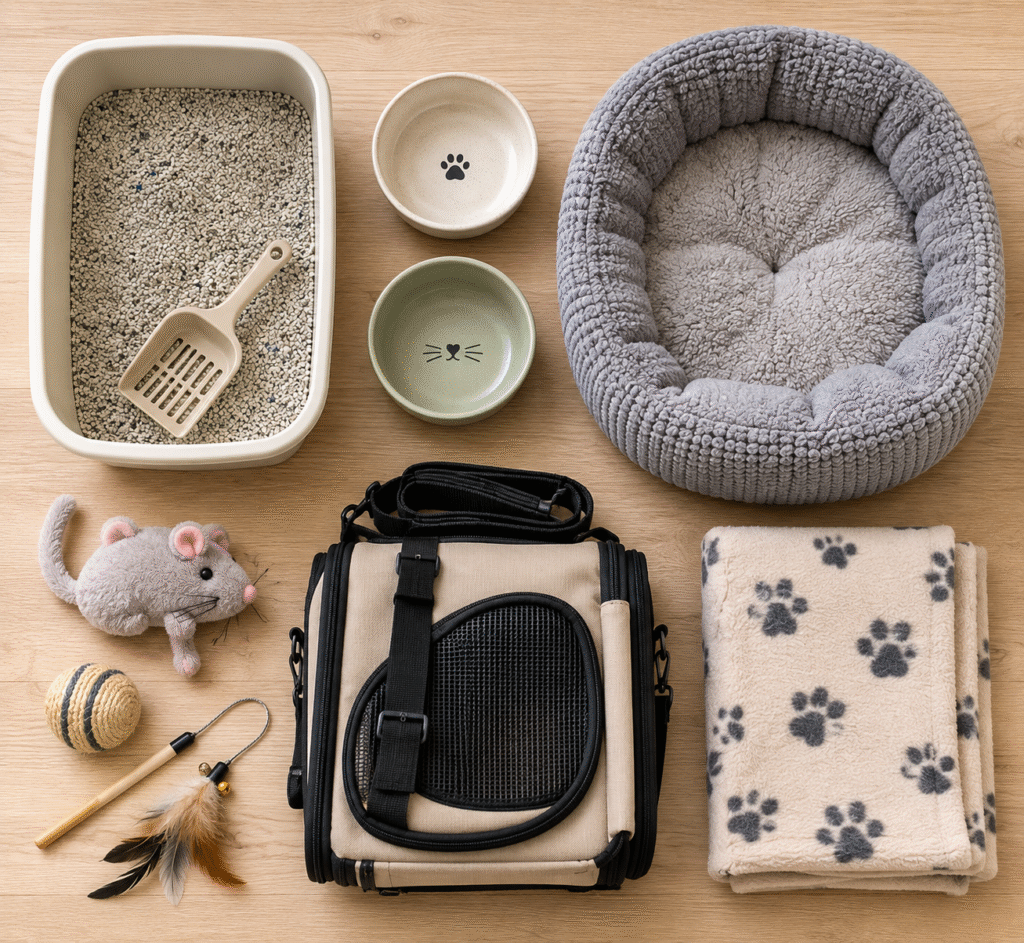
You’ll need a litter tray with low sides so a small kitten can actually climb in, plus non clumping litter for the first few weeks (kittens sometimes taste test litter, and clumping types aren’t great if a kitten swallows some). A scoop and an enzymatic cleaner for the inevitable accident round out the basics.
Where you put the tray matters almost as much as the tray itself. Somewhere quiet, away from food and water, somewhere they can always get to.
Food and water
Kitten food isn’t just smaller kibble, it’s genuinely higher in protein and calories because kittens are growing fast. Get both wet and dry, and use shallow bowls they can reach easily.
A lot of cats drink more from moving water than a still bowl, so a water fountain is worth considering even at this early stage.
Beds and comfort
Kittens sleep an absurd amount, something like 20 hours a day, so the bed matters more than people expect. Go small and enclosed rather than a big open bed. Most kittens want to feel tucked in, not spread out.
Toys and enrichment
Play does more than tire a kitten out, it’s how they build coordination and confidence. A decent mix covers most of what they need: a wand toy for playing with you, a few small balls or soft toys for playing alone, and a scratching post you introduce from day one so scratching furniture never becomes the habit.
Carriers and travel
You need a secure carrier before the kitten even gets home, since that’s how they’ll travel to you and then to the vet not long after. Go for one with a top opening panel as getting a nervous kitten in and out through a front-door-only carrier is genuinely harder than it looks.
If your new cat is a larger breed, check our guide to cat carriers for large cats before you buy.
Grooming
Even short haired kittens benefit from a soft brush early on. It’s less about the coat at this age and more about getting them used to you handling them, which pays off later at nail trims and vet visits.
Kitten Proofing Your Home
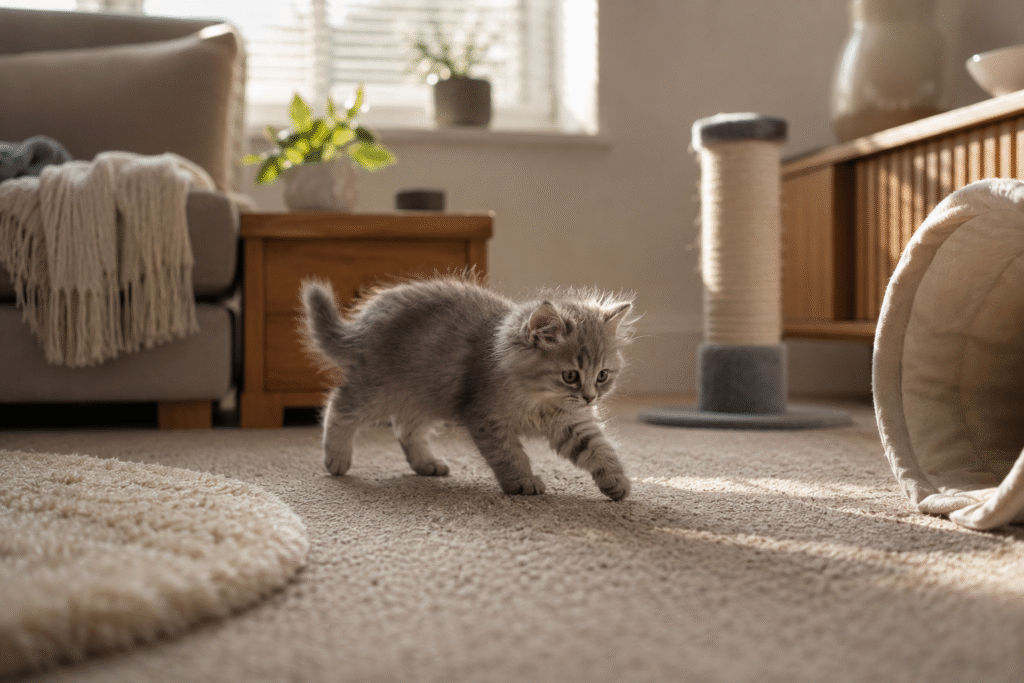
Kittens are curious and small enough to get into places you’d never expect. Before they arrive, worth checking:
- Loose wires and blind cords tucked away
- Gaps behind appliances or under furniture they could get stuck in
- Toxic houseplants removed (lilies especially, they’re genuinely dangerous to cats)
- Cleaning products and medication out of reach
- Window and balcony screens actually secure
First Vet Visit and Microchipping
Register with a local vet before your kitten arrives if you haven’t already. A lot of practices offer a free first check up for new kittens, worth booking that in for the first week.
Under UK law, you must microchip your cat in England by 20 weeks old and register your correct details on an approved database. If your kitten isn’t chipped yet, this is one of the first things to sort with your vet.
They’ll also talk you through vaccinations (usually starting around 9 weeks, with a second dose a few weeks after), flea and worm treatment, when to think about neutering (often from 4 months), and pet insurance, which is worth arranging before anything goes wrong rather than after, since insurers exclude pre-existing conditions once you’ve claimed.
A Simple First Week Routine
Keep it calm and predictable:
- Let them explore one room at a time, not the whole house at once
- Keep feeding times consistent
- Handle them gently and briefly at first, let them come to you rather than the other way round
- Introduce other pets slowly, only once your kitten seems settled
- Expect some hiding. Don’t force it. Confidence builds over days, not hours
Final Thoughts
Sort the basics on this list before your kitten arrives and the first few days go a lot smoother, for both of you. Everything else really is just time and patience.