
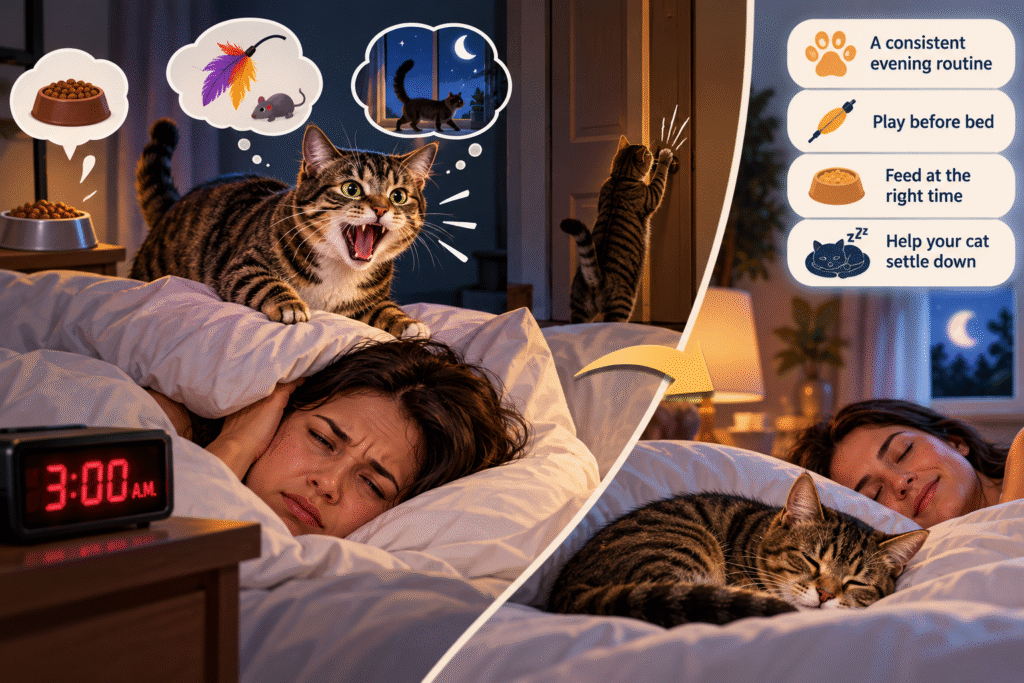
Does your cat turn into a tiny alarm clock at 3 a.m.? One minute, you’re enjoying a peaceful sleep, and the next, your furry friend is meowing loudly, jumping onto your pillow, scratching the bedroom door, or demanding breakfast hours before sunrise.
If this sounds familiar, you’re certainly not alone. Many cat owners struggle with nighttime interruptions, especially when their cats seem determined to play, eat, or explore while everyone else is trying to sleep.
The good news is that learning how to stop your cat waking you up at night doesn’t require punishment, shutting your cat away without preparation, or completely changing your lifestyle. Instead, a consistent evening routine can help your cat settle down and develop healthier sleeping habits.
Let’s explore why cats become active at night and how a few simple changes can help both of you enjoy a peaceful night’s sleep.
Why Does Your Cat Keep Waking You Up at Night?
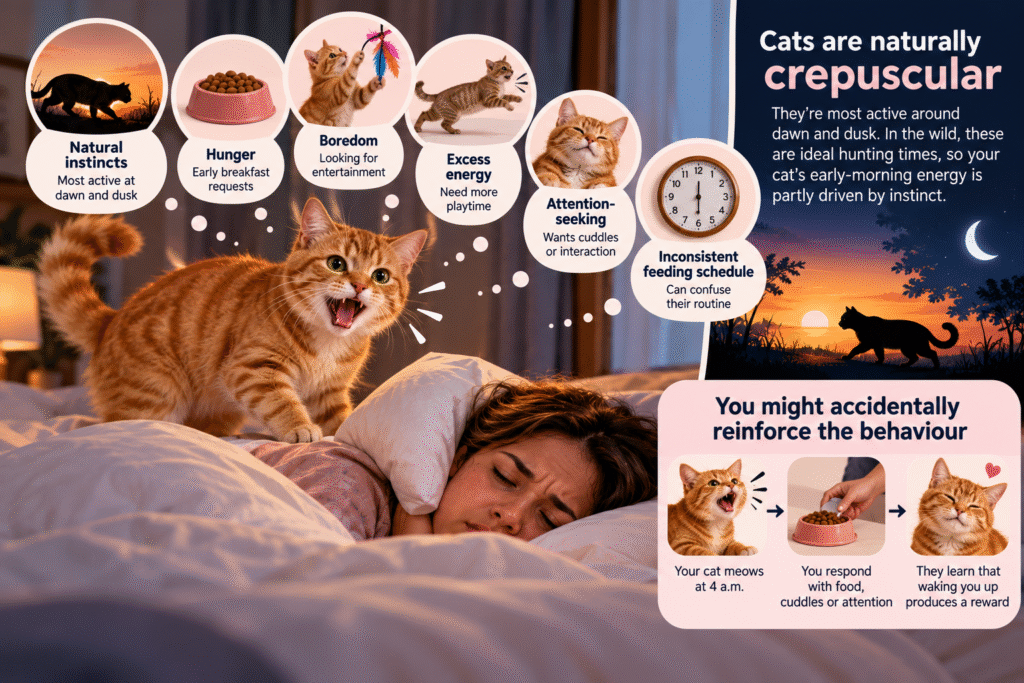
Before trying to change your cat’s behaviour, it’s important to understand what’s causing it. Cats are naturally crepuscular animals, meaning they’re most active around dawn and dusk. In the wild, these are ideal hunting times, so your cat’s early-morning energy is partly driven by instinct.
However, natural instincts aren’t the only reason cats disturb their owners. Hunger, boredom, excess energy, attention-seeking, and inconsistent feeding schedules can all contribute to nighttime activity.
Sometimes, owners accidentally reinforce the behaviour. If your cat meows at 4 a.m. and you respond by giving them food, cuddles, or attention, they may quickly learn that waking you up produces a reward. Understanding these patterns is the first step towards creating a routine that actually works.
Step 1: Tire Your Cat Out With Evening Playtime
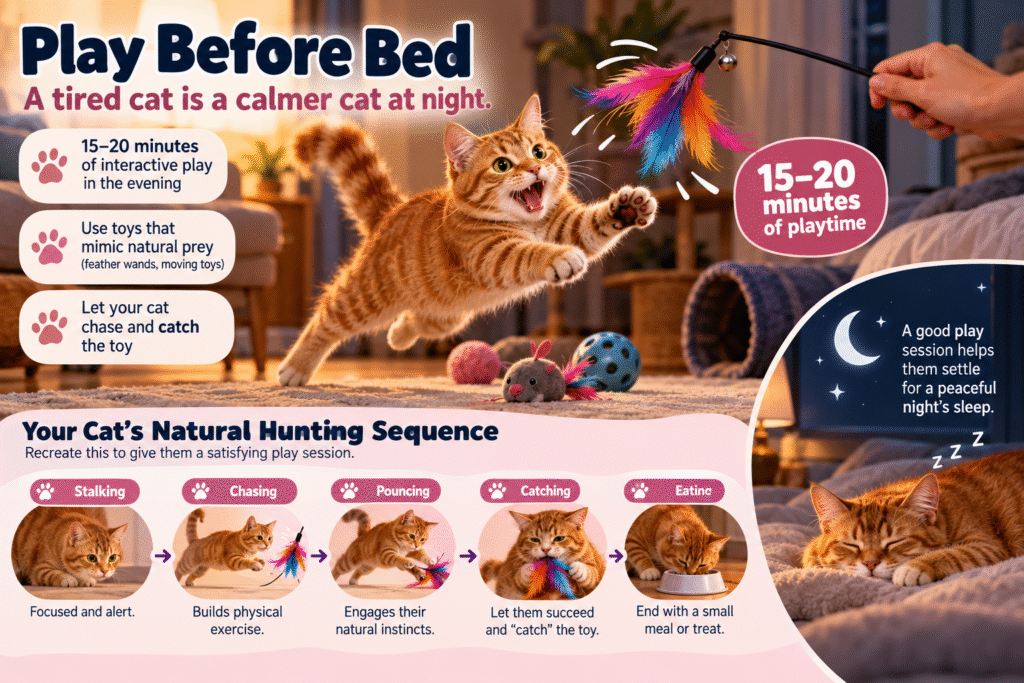
One of the most effective ways to reduce nighttime interruptions is to give your cat an opportunity to burn off energy before bedtime. Cats have a natural hunting sequence involving stalking, chasing, pouncing, catching, and eventually eating. You can recreate this experience with interactive toys such as feather wands, moving toys, or soft prey-shaped toys.
Aim for approximately 15–20 minutes of interactive play in the evening, adjusting the duration to your cat’s age, health, and enthusiasm. Let your cat chase and successfully catch the toy rather than constantly keeping it out of reach. A satisfying play session provides both physical exercise and mental stimulation, making it easier for your cat to settle afterwards.
Recommended Amazon product: Interactive Feather Wand Cat Toy useful for encouraging natural hunting behaviour before bedtime.
Step 2: Feed Your Cat After Playtime
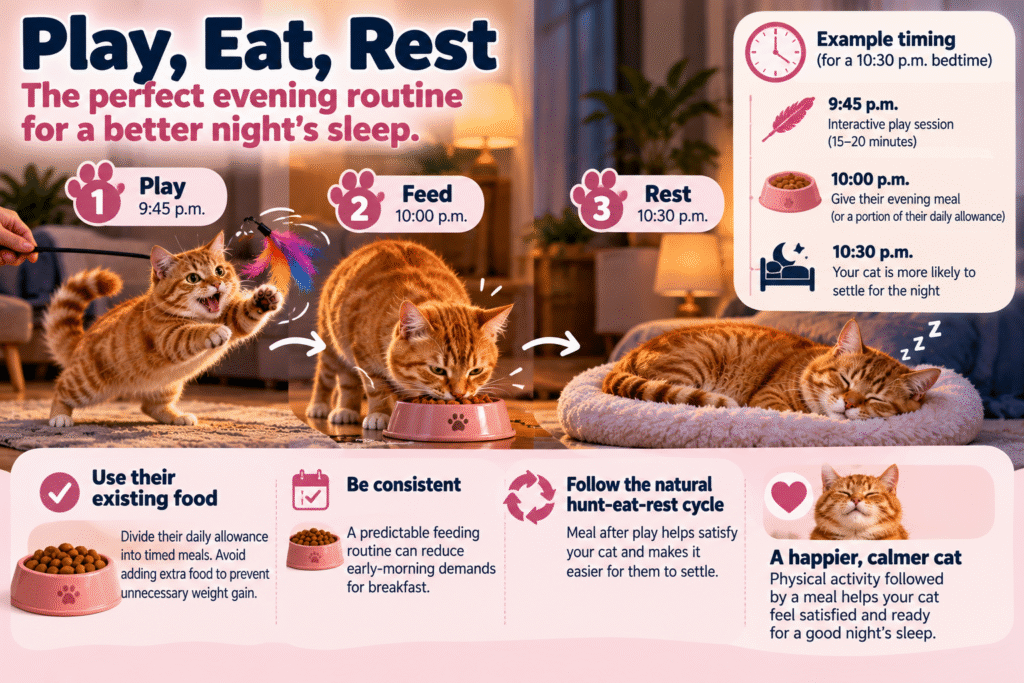
Timing your cat’s evening meal can make a noticeable difference to their sleeping habits. After an active play session, offer your cat their scheduled evening meal or a small portion of their daily food allowance. This helps recreate the natural hunt-eat-rest cycle that many cats instinctively follow.
For example, if you normally go to bed around 10:30 p.m., you could play with your cat at 9:45 p.m. and provide their evening meal shortly afterwards. Avoid simply adding extra food to your cat’s diet. Instead, divide their existing daily allowance into appropriately timed meals to prevent unnecessary weight gain. A predictable feeding routine may also reduce early-morning demands for breakfast.
Step 3: Stop Rewarding Nighttime Meowing
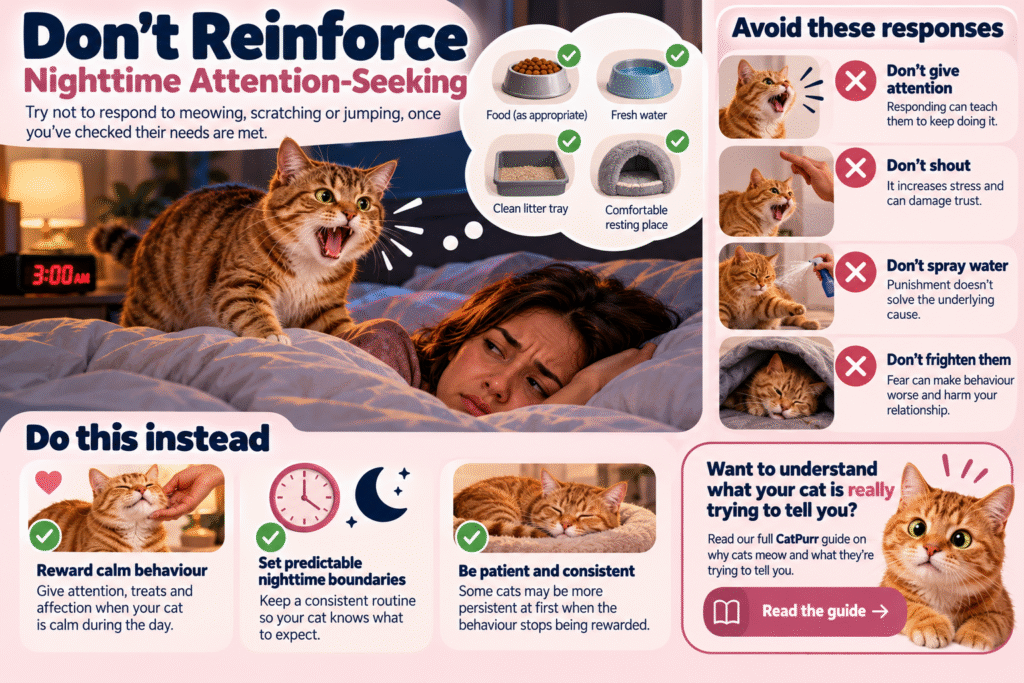
This step can be challenging, especially when you’re exhausted and desperately want your cat to stop making noise. If your cat has learned that meowing, scratching, or jumping onto your bed gets attention, responding every time can unintentionally encourage the behaviour. Once you’ve confirmed that your cat is healthy and has access to food as appropriate, fresh water, a clean litter tray, and a comfortable resting place, try not to reward attention-seeking interruptions.
Avoid shouting, spraying water, or frightening your cat. Punishment can increase stress and damage trust without addressing the underlying cause. Instead, reward calm behaviour during the day and establish predictable boundaries at night.
Remember that some cats may temporarily become more persistent when a previously rewarded behaviour stops working. Consistency matters, but persistent or unusual vocalisation should never automatically be dismissed as attention-seeking. For more insight into feline communication, explore our CatPurr guide on why cats meow and what they’re trying to tell you.
Step 4: Use an Automatic Feeder for Early-Morning Hunger
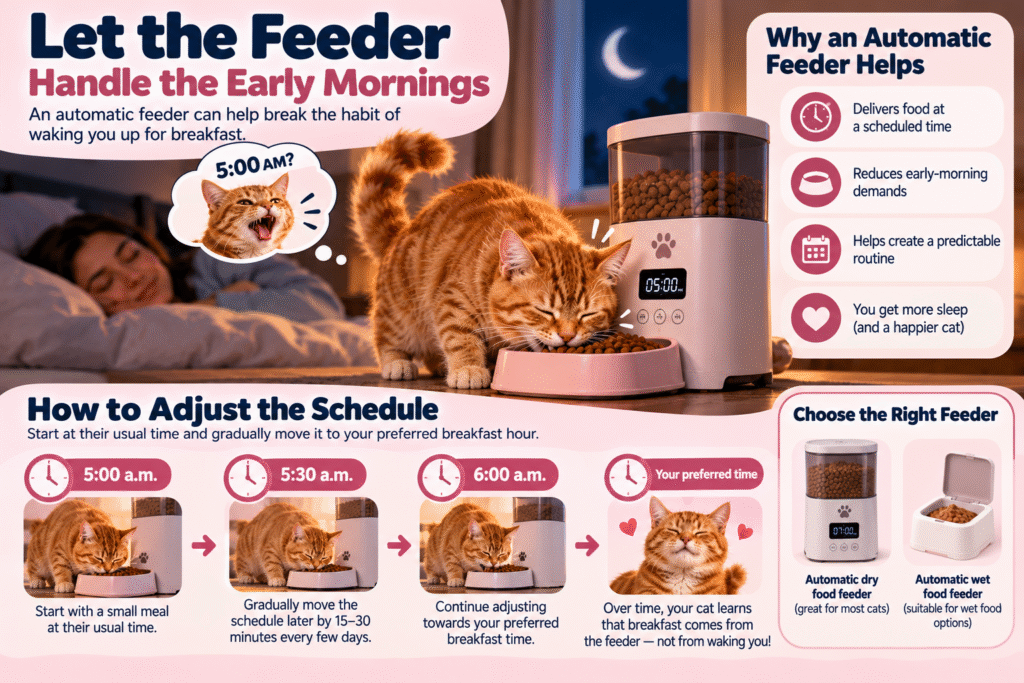
If your cat regularly wakes you up demanding breakfast, an automatic feeder may be one of the most practical solutions. A programmable feeder delivers food at a scheduled time without requiring you to get out of bed. Over time, your cat may begin associating breakfast with the feeder rather than with waking you.
For example, if your cat usually demands food at 5 a.m., you could initially schedule a small meal close to that time and gradually adjust the schedule towards your preferred breakfast hour. Choose a feeder that reliably dispenses measured portions and suits your cat’s diet. Automatic feeders are especially convenient for dry food, although some models are designed for wet food.
Recommended Amazon product: Programmable Automatic Cat Feeder helpful for establishing predictable breakfast times.
Step 5: Create a Comfortable Nighttime Sleeping Space

Your cat needs a comfortable, secure environment where they can relax without constantly seeking reassurance or entertainment. Provide a cosy cat bed in a quiet location away from household noise. Some cats prefer enclosed beds, while others enjoy elevated sleeping areas where they can observe their surroundings.
Make sure your cat can access fresh water and a clean litter tray throughout the night.If your cat sleeps outside your bedroom, introduce that arrangement gradually and make their sleeping area inviting. Sudden isolation can create additional stress, particularly for kittens or cats accustomed to sleeping beside their owners.
Recommended Amazon product: Soft Washable Cat Bed — provides a dedicated, comfortable resting space.
Step 6: Keep Your Cat Mentally Stimulated During the Day
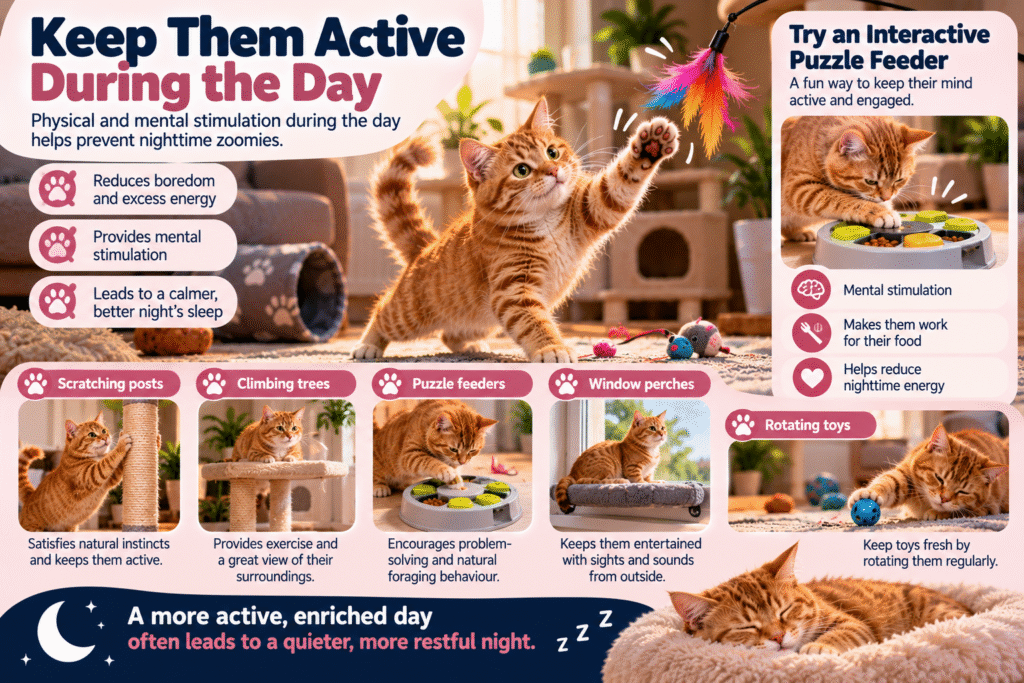
A cat that spends most of the day sleeping without much stimulation may have plenty of unused energy when bedtime arrives. Encourage healthy activity by providing scratching posts, climbing trees, puzzle feeders, window perches, and rotating toys.
Puzzle feeders are particularly useful because they encourage cats to work for their food, combining mental stimulation with natural foraging behaviour. Short play sessions throughout the day can also help prevent boredom and reduce the intensity of nighttime activity.
Recommended Amazon product: Interactive Cat Puzzle Feeder encourages problem-solving and independent enrichment.
For more enrichment inspiration, read our related article: 10 Must-Have Cat Toys and Accessories Your Cat Will Love.
When Should You Be Concerned About Nighttime Activity?
Although nighttime activity is often behavioural, sudden changes in sleeping patterns can sometimes indicate an underlying health problem. If your cat begins vocalising excessively, seems unusually restless, drinks more water, loses weight, appears confused, or shows signs of discomfort, arrange a veterinary appointment.
Older cats may experience changes related to pain, hyperthyroidism, high blood pressure, or cognitive dysfunction. These conditions require professional assessment rather than behavioural training alone. Never ignore a sudden or unexplained change in your cat’s normal behaviour.
Final Thoughts: Better Sleep Starts With a Better Routine
Stopping your cat from waking you up at night is about understanding their needs rather than fighting their natural instincts. By combining evening playtime, scheduled meals, mental enrichment, a comfortable sleeping space, and consistent responses to attention-seeking behaviour, you can help your cat develop calmer nighttime habits. Be patient, celebrate small improvements, and remember that every cat responds differently.With the right routine, peaceful nights can become a reality for both you and your furry companion.
Want more practical advice for happier, healthier cats? Explore more expert informed cat care tips, training guides, and product recommendations at CatPurr.