
Every rescue cat carries a different story into your home. Some walk out of the carrier and start exploring within the hour. Others take weeks just to leave a hiding spot. Neither reaction tells you anything about how well things will eventually go.
Adopting a big or heavy cat? Our guide to cat carriers for large cats covers the sizes that actually fit.
This guide covers how to settle a rescue cat into a new home in a way that respects their pace instead of rushing your own timeline.
If you already have a cat at home, read our step-by-step guide on how to introduce two cats before they meet.
Why Rescue Cats Often Need More Time Than Kittens
A rescue cat usually arrives with a history you don’t fully know. Maybe they lived on the street, moved through several homes, or spent months in a shelter cage. All of that shapes how safe they feel with you at first, and none of it means something is wrong with them.
Give the process weeks, not days. Some cats settle fast. Plenty take a full month before they act like themselves.
Setting Up Their Safe Space
Pick one quiet room before your cat arrives, ideally somewhere away from the main hallway or a noisy kitchen. Fill it with the basics: litter tray, food, water, a scratching post, and somewhere to hide.
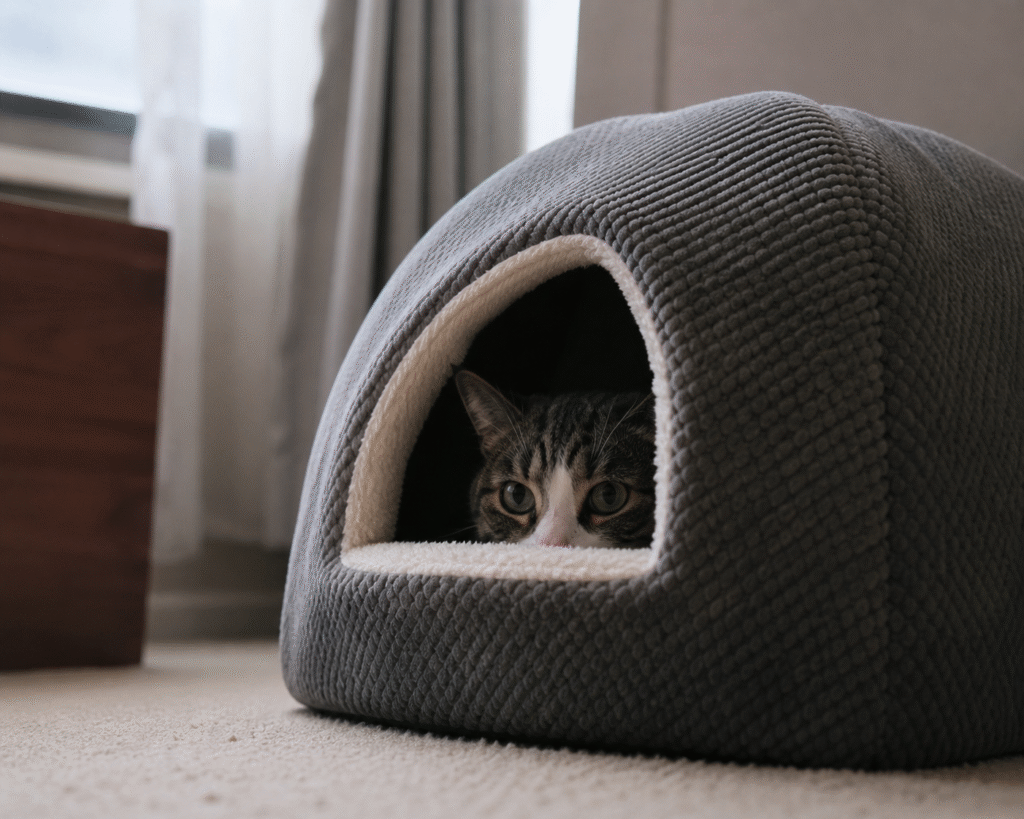
A covered hideaway bed matters more here than a standard cat bed. Rescue cats often want to disappear completely for the first few days, not just curl up somewhere soft.
If your cat came from a busy shelter, a calming pheromone diffuser in this room can take a genuine edge off the adjustment period.
Litter tray basics stay the same whether you’re working with a kitten or an adult rescue. Our guide to litter training covers what to check if accidents happen early on.
The First Few Days
Let your cat set the pace completely. Sit in the room without approaching them, let them come to you, and avoid picking them up before they choose to get close on their own.
Speak quietly and move slowly. Sudden noise or fast movement undoes trust fast with a cat who’s already on edge.
Skip introducing other pets or visitors this week. One new relationship at a time is plenty.

Signs They’re Starting to Trust You
Trust builds in small signals long before a cat becomes affectionate. Watch for slow blinks, an upright tail, or your cat choosing to sit somewhere visible instead of hiding away.
Eating and using the litter tray normally are good early signs too, even if your cat still avoids direct contact.
Once your cat seems reasonably settled, a few short play sessions a day help build confidence. Toys that let them stay in control, like a wand toy they can retreat from, work better than anything that feels forced.
If your cat still seems anxious weeks in, our guide to toys for anxious cats has some genuinely useful options.

Handling Setbacks
Progress with a rescue cat rarely moves in a straight line. A loud noise, a new visitor, or even a change in weather can send a settled cat back into hiding for a day or two.
That’s not a failure on your part. Give them space, go back to the basics that worked before, and let them recover in their own time.
If accidents outside the litter tray start happening after a period of doing well, stress is the most likely cause rather than a training issue. Our guide on litter box problems walks through what to check.
When to Get Extra Help
Most rescue cats settle with time, patience, and a calm environment. But reach out to your vet or the rescue organisation you adopted from if your cat refuses food for more than a day, shows signs of pain, or seems distressed well beyond what feels normal for the adjustment period.
Cats Protection has solid guidance on settling in a rescue cat, if you want a second source alongside this one.
Final Thoughts
There’s no set number of days that tells you a rescue cat has settled. Some cats trust you within a week. Others take months to fully relax. Both outcomes are completely normal.
Stay patient, keep their environment predictable, and let them decide when they’re ready. Almost every rescue cat gets there eventually.
Whatever pace it takes, this is how you settle a rescue cat into a new home for good.