
Bringing home a tiny kitten is a wonderful experience. But soon every new owner asks the same question how do we make sure they use the litter box and not my favorite rug.. The good news is that cats have a natural instinct to dig and bury. You don’t need to teach them from scratch you just need to guide them correctly. In this guide, we will show you exactly how to litter train a kitten using 5 simple steps. You’ll also find helpful photos to visualize each stage, plus trusted Amazon product recommendations that make the whole process smooth and mess free.
1. Set Up the Perfect Litter Box First
Before your kitten walks through the door the bathroom area must be ready. A poorly chosen box or the wrong litter is the biggest reason training fails.
Choose an Open Low Sided Box
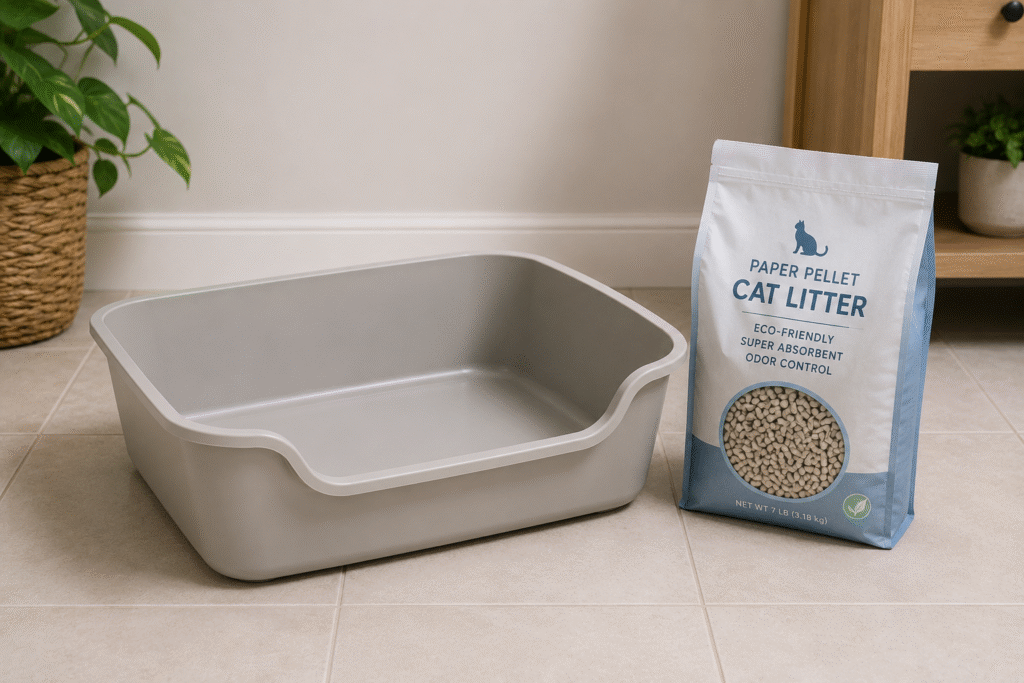
The Van Ness Small Open Litter Pan is perfectly sized for kittens, with a low front entry that even the smallest paws can manage.
Use a Kitten Safe Litter
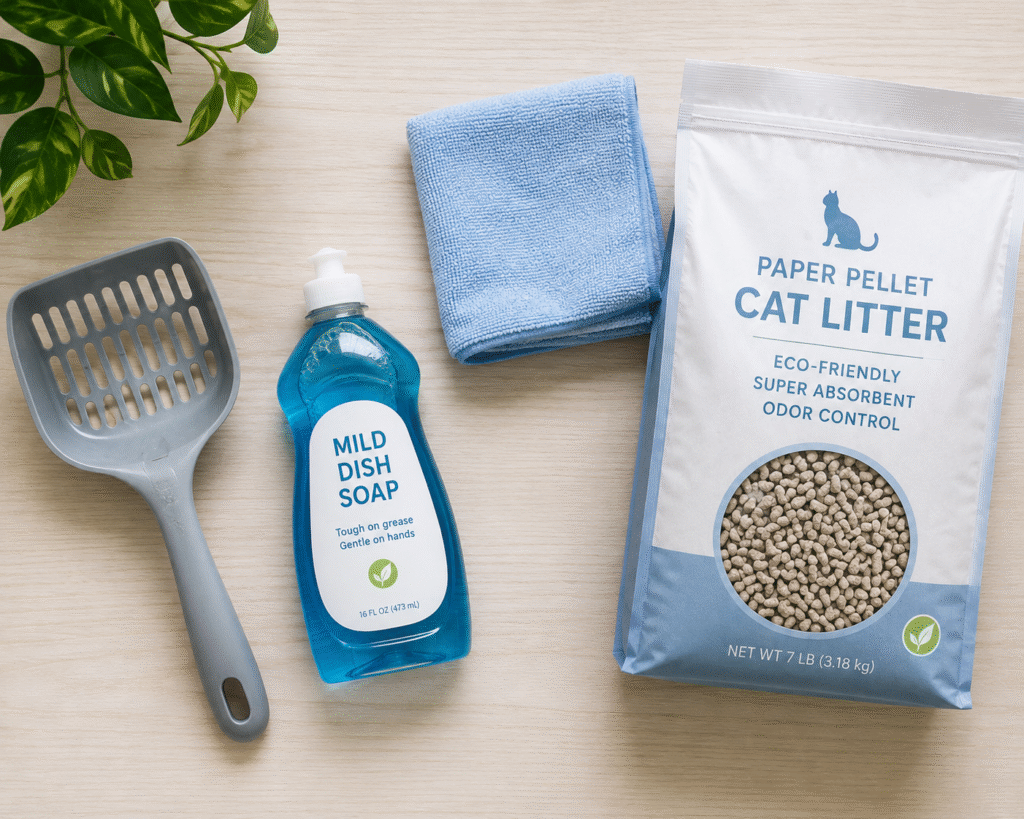
For the first four weeks, do not use clumping clay litter. Kittens groom themselves often and may swallow litter particles stuck to their fur. If clumping litter is swallowed, it can swell inside the stomach and cause a serious blockage. Instead, choose a non clumping, unscented litter made from paper pellets. It is safe, dust free, and soft on tiny paws. Fresh News Cat Litter is recommended by veterinarians for young kittens. It absorbs well and keeps the air clean.
Place the Box Wisely
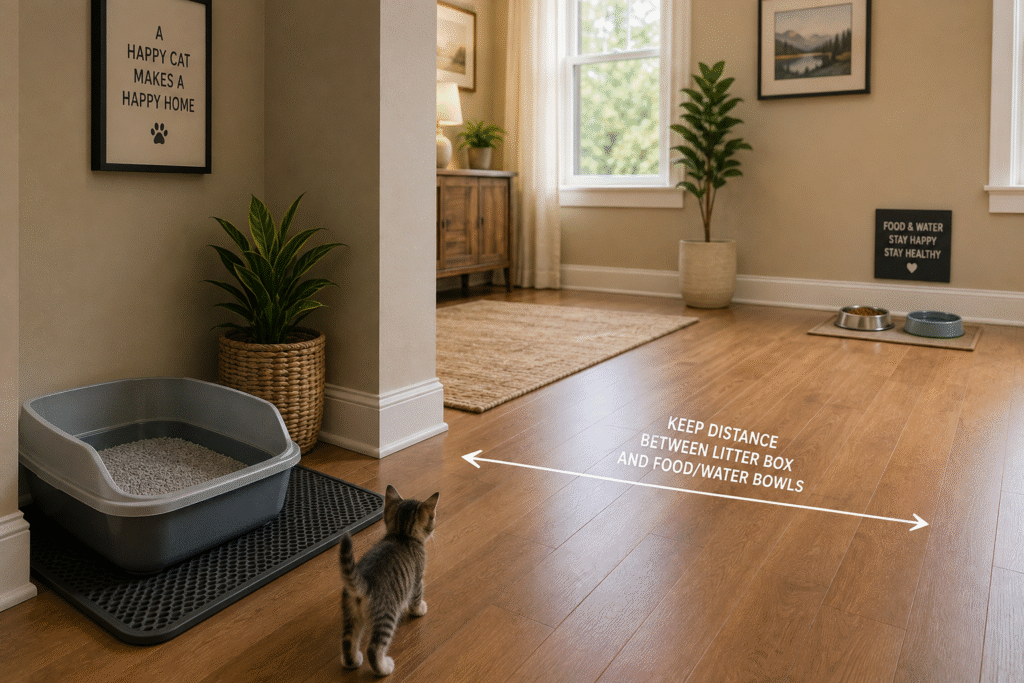
Set the litter box in a quiet corner, away from noisy washing machines foot traffic, and loud electronics. Make sure it is nowhere near the kitten’s food and water bowls. Cats instinctively refuse to toilet where they eat in a small home, even a few feet of separation can make a big difference.
2. Introduce Your Kitten the Right Way
Now that the setup is ready, it’s time to show your kitten where to go. First introductions matter a lot.
Create a Small Sanctuary Room
For the first two days after bringing your kitten home, confine them to a small, secure room such as a bathroom or spare bedroom. Make sure to include their bed, water, and litter box within this space. Limiting their area helps prevent the kitten from getting lost and encourages them to locate the litter box when needed naturally. This simple setup significantly lowers the risk of accidents around the house, making the transition smoother for both you and your new pet.
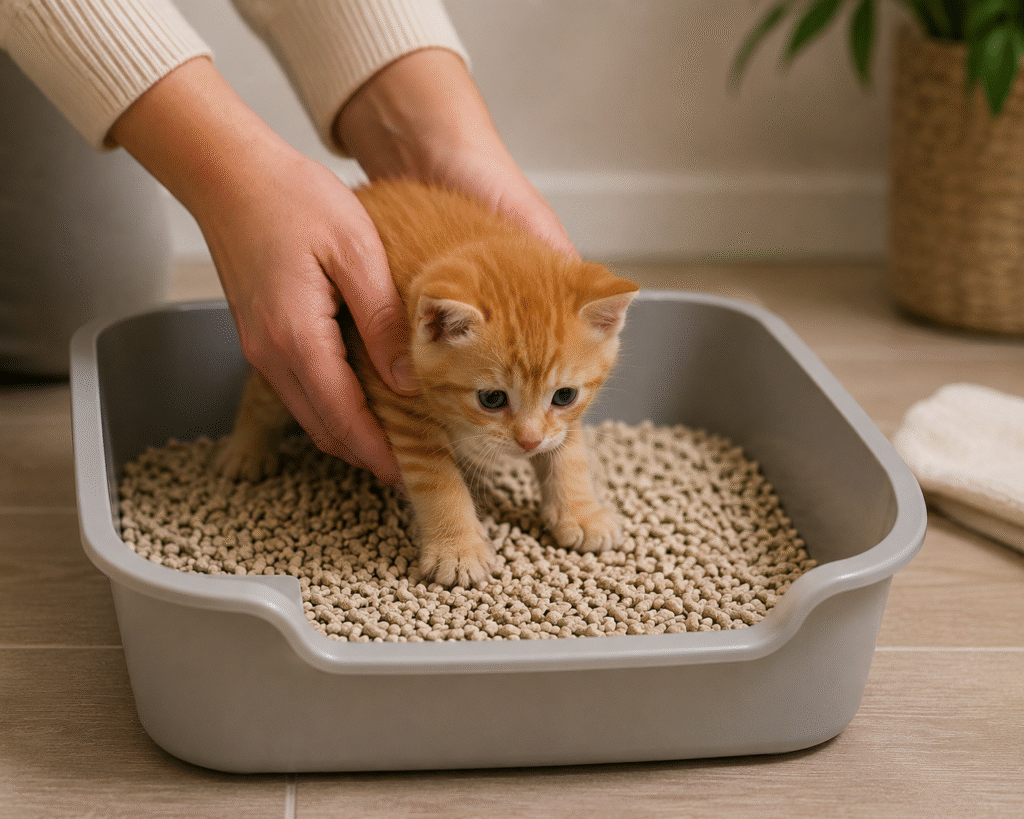
Place Them Gently in the Box
When you first bring the kitten home, before they explore anything else, set them softly into the clean litter. Let them sniff and feel the texture. You can gently take one front paw and scratch the pellets a few times. This simple motion often wakes up the kitten’s deep instinct to dig and eliminate. They may jump out immediately, but their brain has already marked the spot.
Follow a Simple Timing Rule
Kittens usually need the toilet 10 to 15 minutes after eating, right after waking from a nap or following a burst of play. Watch for signals like sniffing the ground, circling or stopping suddenly. When you see these signs, calmly carry the kitten to the box. Do not rush or startle them.
3. Use Praise Never Punishment
This step is about building trust. How you react in the first few days shapes your kitten’s confidence forever.
Never Scold or Rub Their Nose
If the kitten has an accident on the floor, do not shout, hit or push their face into the mess. A kitten cannot link your anger to the act of peeing on the carpet. Instead, they learn to fear you and may start hiding when they need to go, finding secret spots behind furniture. If you catch them in the act, just make a soft noise to interrupt and immediately place them in the litter box. Then clean up without any fuss.
Reward Every Success
The moment your kitten squats and finishes in the box, speak in a happy, high pitched tone and offer a tiny treat right away. This builds a positive association. The kitten learns that the litter box is a safe, happy place. PureBites Freeze Dried Chicken Cat Treats contain only pure chicken breast. Kittens adore the taste, and they are healthy enough to use daily.
Remove Accident Smells Completely
Cat urine has strong-smelling crystals that regular cleaners cannot remove. If even a trace remains your kitten will sniff it and think that spot is a permanent bathroom. Use an enzymatic cleaner made for pet messes. It breaks down the odor at a molecular level. Rocco and Roxie Professional Strength Stain and Odor Eliminator is a top rated spray that eliminates odors and discourages repeat accidents.
4. Expand Space Slowly and Add a Second Box
After two full days with zero accidents in the sanctuary room, your kitten is ready for more territory. But don’t open every door at once.
One Room at a Time
Allow the kitten to explore one extra room under your supervision. After playtime or a meal gently carry them back to the litter box so they keep the location clear in their mind. Do this for each new room until they confidently walk to the box on their own.
Follow the Plus One Rule
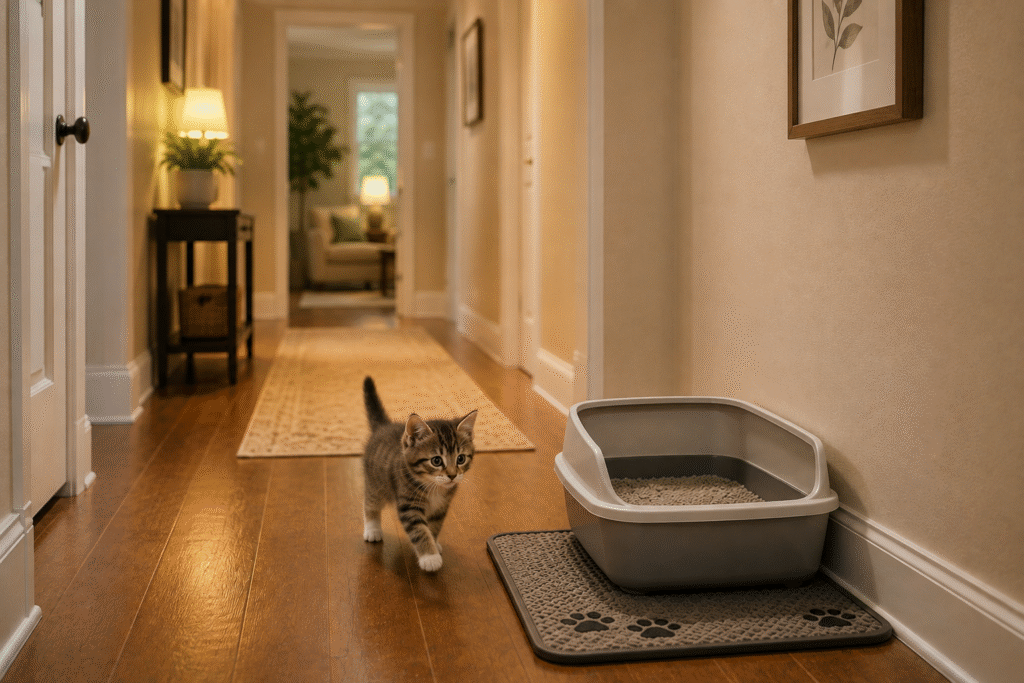
The golden rule for litter boxes is number of cats plus one. For a single kitten, you need at least two litter boxes. Place them in different quiet spots, ideally on separate floors or opposite ends of your home. This ensures that when the urge hits, a toilet is never too far away.
Switching Litter Later Do It Gradually
If you want to move from paper pellets to a clumping litter for easier scooping, wait until the kitten is older and fully trained. Then mix 25% new litter with 75% old litter in the second box. Slowly increase the new litter over one week. A litter with natural attractants makes the switch effortless. Dr. Elsey’s Cat Attract Clumping Clay Litter contains a herbal scent that naturally draws cats to the box. It’s a game changer for transitions.
5.Keep It Clean Without Fail
Cats are extremely clean animals. A dirty litter box is the number one reason a previously trained kitten suddenly starts going elsewhere. Imagine an unflushed public toilet that’s how your kitten sees a soiled box.
Scoop Twice Every Day
Remove solid waste and urine clumps every morning and evening. It takes only a couple of minutes and prevents smells from building up. Use a sturdy scoop that makes the job quick and easy. WePet Cat Litter Scoop has a rust proof metal design. Clumps slide right off without sticking.
Contain the Odor
Instead of walking to the outside bin each time, store scooped waste in a dedicated pail that seals in smells. It saves time and keeps your home fresh. Litter Genie Disposal System locks away odours completely and uses refill bags that last for weeks.
Deep Clean Every Month
Once a month empty the entire box. Wash it with warm water and mild, unscented dish soap. Never use bleach or strong chemical cleaners ammonia smells can mix with urine traces and produce harmful fumes and the powerful scent can scare your kitten away from the box. Rinse well, dry completely, and refill with fresh litter.
Final Thoughts
Learning how to litter train a kitten doesn’t need to be stressful. With an open, safe box, gentle guidance, consistent praise, and daily cleanliness, your kitten’s natural instincts will take over. Follow these five simple steps and within a week, accidents will be a rare memory. Most importantly, enjoy this sweet, playful stage your kitten will grow up fast, but good potty habits will last a lifetime. Just as proper nutrition plays an important role in keeping your kitten healthy, good litter habits are another essential part of responsible cat care. If you haven’t already be sure to read our previous guide 7 Cat Nutrition Mistakes Every Cat Owner Should Avoid, to learn about common feeding mistakes that can affect your cat’s health and well being.