
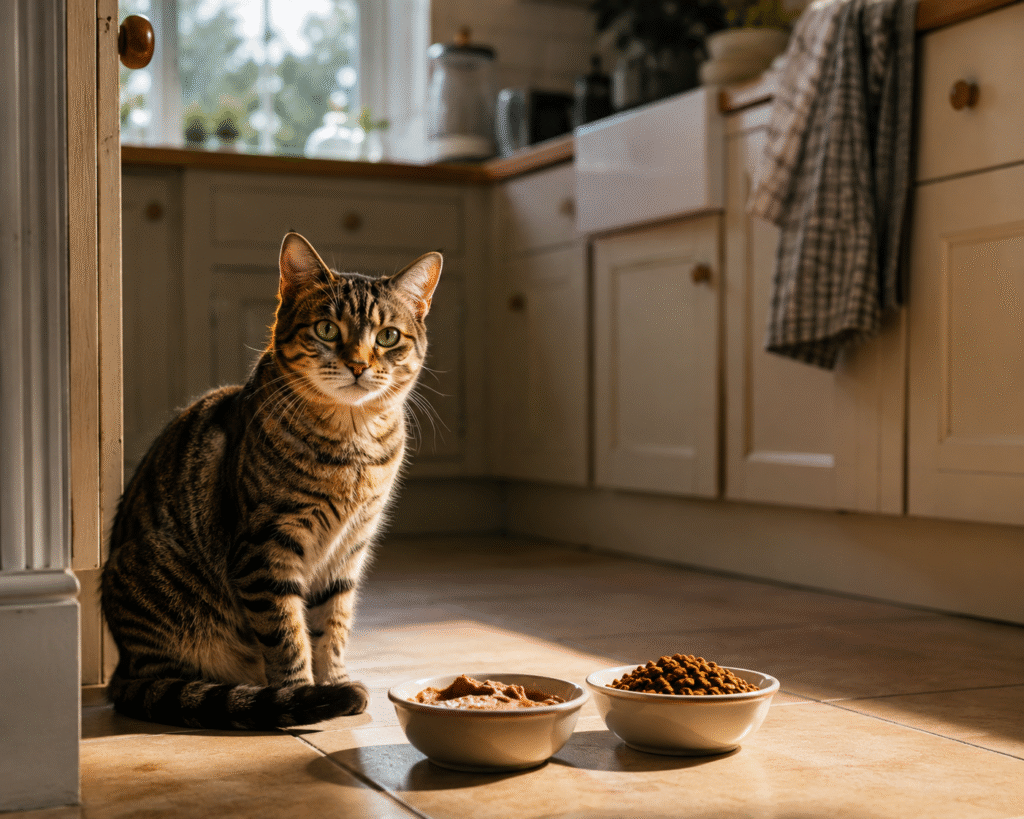
If you’ve ever stood in your kitchen at 6 a.m. with a cat yowling at your ankles, you’ve probably wondered whether you’re spoiling them rotten or leaving them genuinely hungry. Cat feeding isn’t as simple as “fill the bowl when it’s empty.” Too much food leads to obesity, diabetes, and joint problems. Too little leaves your cat anxious, prone to scavenging, and at risk of nutrient deficiencies. So how often should you feed a cat, and how do you actually get the amount right?
This guide breaks down exactly how much, how often, and when to feed your cat at every life stage, plus a full weekly feeding calendar you can copy straight into your routine.
Why Cat Feeding Schedules Matter More Than You Think
Cats are obligate carnivores with a digestive system built for small, frequent meals rather than one or two large ones. In the wild, a cat might catch and eat 8-10 small prey items a day. Domestic cats still carry that biology, even if they’ve never seen a mouse in their life.
When feeding is irregular, two things tend to happen. First, cats free-fed on dry kibble all day often overeat out of boredom, and obesity is now one of the most common health issues seen in UK vet practices. Second, cats fed too infrequently, especially with long gaps overnight, can develop a condition vets sometimes call “hangry cat syndrome” – vomiting bile on an empty stomach, or aggressive begging behaviour that looks like a personality problem but is really a scheduling problem.
Getting the schedule right isn’t about rigid perfection. It’s about consistency, appropriate portions, and matching the schedule to your cat’s age and health status.
How Often Should You Feed a Cat?
This is the question every cat owner eventually asks, and the honest answer is: it depends on age, weight, and whether your cat has any health conditions. That said, here are reliable starting points:
Kittens (up to 6 months): 3-4 small meals a day. Kittens have tiny stomachs and high energy needs for growth, so frequent meals prevent blood sugar crashes and support development.
Adult cats (1-10 years): 2 meals a day is the standard recommendation from most vets, spaced roughly 8-12 hours apart. Some owners split this into 3 smaller meals, which can help reduce begging and vomiting in cats prone to eating too fast.
Senior cats (10+ years): Often 2-3 smaller meals, adjusted based on appetite changes, dental health, and any medical conditions like kidney disease, which is common in older cats and often requires a specific feeding approach.
Cats with health conditions (diabetic, overweight, or with digestive issues): Feeding frequency should be set with your vet, since portion timing can directly affect medication schedules and blood sugar regulation.
If you’re currently free-feeding (leaving dry food out all day), transitioning to scheduled meals is one of the simplest ways to gain control over your cat’s weight without changing the food itself.
How Much Should You Actually Be Feeding?

Feeding frequency is only half the equation – portion size is where most owners go wrong. The amount depends on your cat’s weight, activity level, and whether you’re feeding wet, dry, or a mix.
As a general guide:
- Dry food: Most adult cats need roughly 45-60g per day, split across meals, though this varies significantly by brand and calorie density
- Wet food: A typical adult cat needs about 150-200g per day, again divided into 2-3 servings
- Mixed feeding: Combine according to the calorie guidance on both packets, not by matching volume
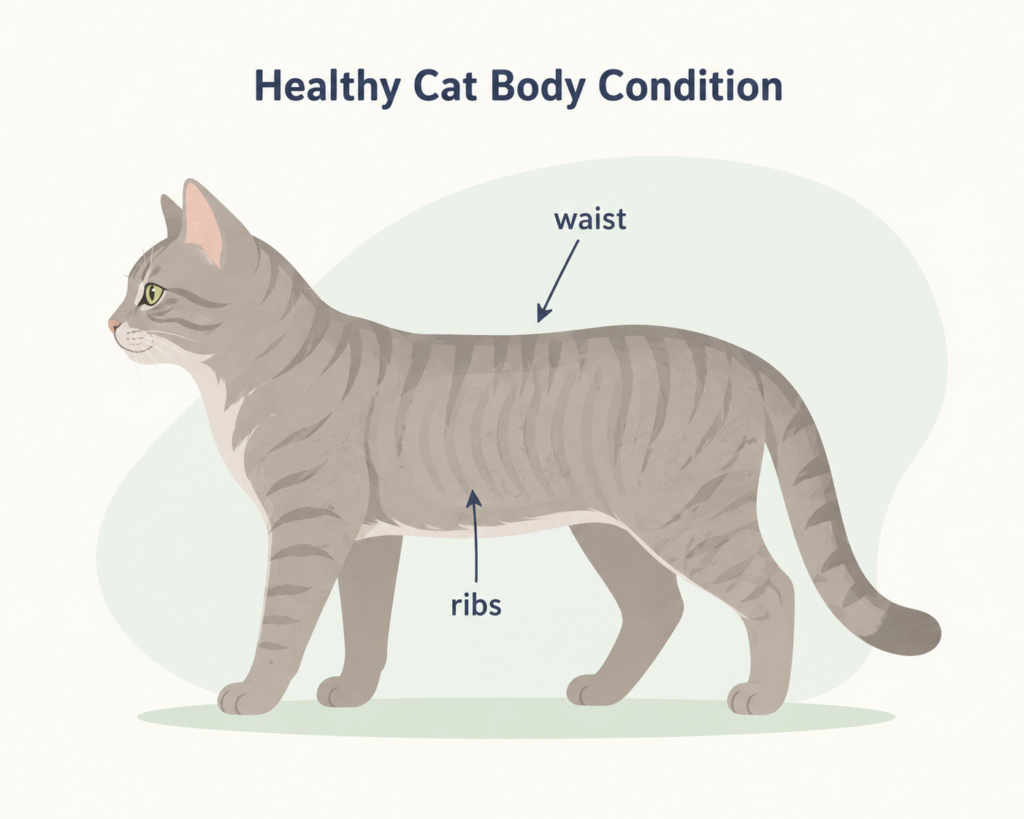
The packaging guidelines are a starting point, not gospel. A lazy indoor cat and an active outdoor cat of the same weight can have very different calorie needs. The best test isn’t the bag – it’s your cat’s body condition. You should be able to feel (though not necessarily see) their ribs without pressing hard, and they should have a visible waist when viewed from above.
Signs You’re Overfeeding or Underfeeding
Overfeeding signs:
- Weight gain, especially around the belly
- Reduced energy or reluctance to jump and play
- Food left in the bowl regularly (though this can also mean they dislike the food)
- Vet flags weight at check-ups
Underfeeding signs:
- Ribs, spine, or hip bones visibly prominent
- Excessive begging or vocalising, particularly at night
- Scavenging behaviour, counter-surfing, or stealing food
- Low energy paired with visible thinness (rather than just leanness)
If you’re unsure, a quick chat with your vet during a routine visit is the fastest way to get a tailored answer rather than guessing.
The Perfect Cat Feeding Calendar
Here’s a sample weekly feeding calendar for a healthy adult cat eating two main meals a day, with a light snack option for cats who struggle with long overnight gaps. Adjust portion sizes based on your cat’s weight and the guidance on your specific food packaging.
| Monday | Tuesday | Wednesday | Thursday | Friday | Saturday | Sunday | |
| Morning 7-8am | Wet food, full portion | Wet food, full portion | Wet food, full portion | Wet food, full portion | Wet food, full portion | Wet food, full portion | Wet food, full portion |
| Midday (optional) 1-2pm | Small dry food handful | Skip or small treat | Small dry food handful | Skip or small treat | Small dry food handful | Skip or small treat | Small dry food handful |
| Evening 6-7pm | Wet food, full portion | Wet food, full portion | Wet food, full portion | Wet food, full portion | Wet food, full portion | Wet food, full portion | Wet food, full portion |
| Notes | Fresh water refreshed | Weigh food if tracking intake | Check water bowl cleanliness | Litter tray check for output changes | Good day for a weekly weigh-in | Slightly later meals fine if routine shifts | Review the week – leftover food, begging, or lethargy? |
A few notes on using this calendar:
- Keep meal times consistent, ideally within the same hour each day. Cats regulate hunger cues around routine, and consistency reduces begging.
- The midday snack is optional, not essential – it’s there for cats who wake owners up early or struggle with a 12-hour gap between meals.
- Weekly weigh-ins (even just a visual and physical check) help catch weight drift before it becomes a real problem.
- Adjust for season and activity. Cats sometimes eat slightly less in warmer months and more in winter as their metabolism shifts.
Building a Routine That Actually Sticks
The best feeding schedule is the one you can maintain consistently, not the theoretically perfect one you’ll abandon after two weeks. If mornings are chaotic in your house, consider an automatic cat feeder for the early meal so timing stays consistent even when you’re rushing out the door.
Ultimately, how often should you feed a cat comes down to matching frequency and portion size to your individual cat’s age, weight, and health, then holding that routine steady. Small, consistent adjustments based on how your cat looks and behaves will get you much further than chasing an exact formula. If you’re ever in doubt, your vet is the best resource for fine-tuning portions to your cat’s specific needs.