
Few things frustrate a cat owner more than walking into the laundry room and finding a wet patch on the floor instead of in the litter box. If you have been asking yourself why is my cat peeing outside the litter box, you are not alone this is one of the most common behavior complaints among cat parents, and it is also one of the top reasons cats are surrendered to shelters. The good news is that this behavior almost always has an identifiable cause, and once you understand what is driving it, the fix is usually within reach. Below are the eight most common reasons cats stop using their litter box, along with practical ways to solve each one.
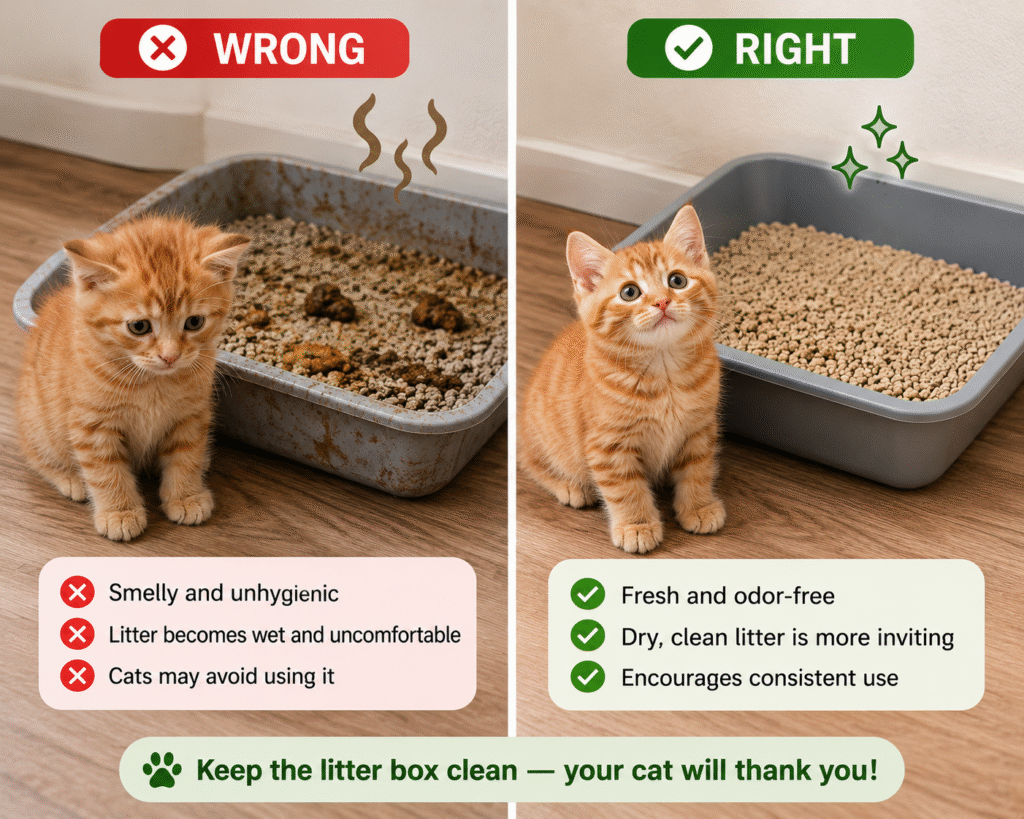
1. A Dirty or Neglected Litter Box
Cats are famously fastidious animals and many of them simply refuse to step into a box that smells or looks unclean. If the litter has not been scooped in a day or two, your cat may decide the bathroom floor is a more appealing option. The fix here is straightforward scoop the box at least once a day and do a full litter change with a wash of the box every one to two weeks. A large, well designed enclosed box such as this Stainless Steel Enclosed Litter Box with Lid can also help contain smells between cleanings, though some cats prefer open boxes, so watch how your cat responds.
2. A Medical Problem Such as a Urinary Tract Infection
Before assuming the issue is purely behavioral, it is worth ruling out a medical cause, because urinary tract infections, bladder stones, crystals, and feline lower urinary tract disease can all make urination painful and lead a cat to associate the litter box itself with that pain. Cats with these conditions often urinate small amounts frequently, cry out while going or lick at their genital area more than usual. A trip to the veterinarian for a urinalysis is the only reliable way to confirm or rule this out, and treating the underlying condition typically resolves the accidents.
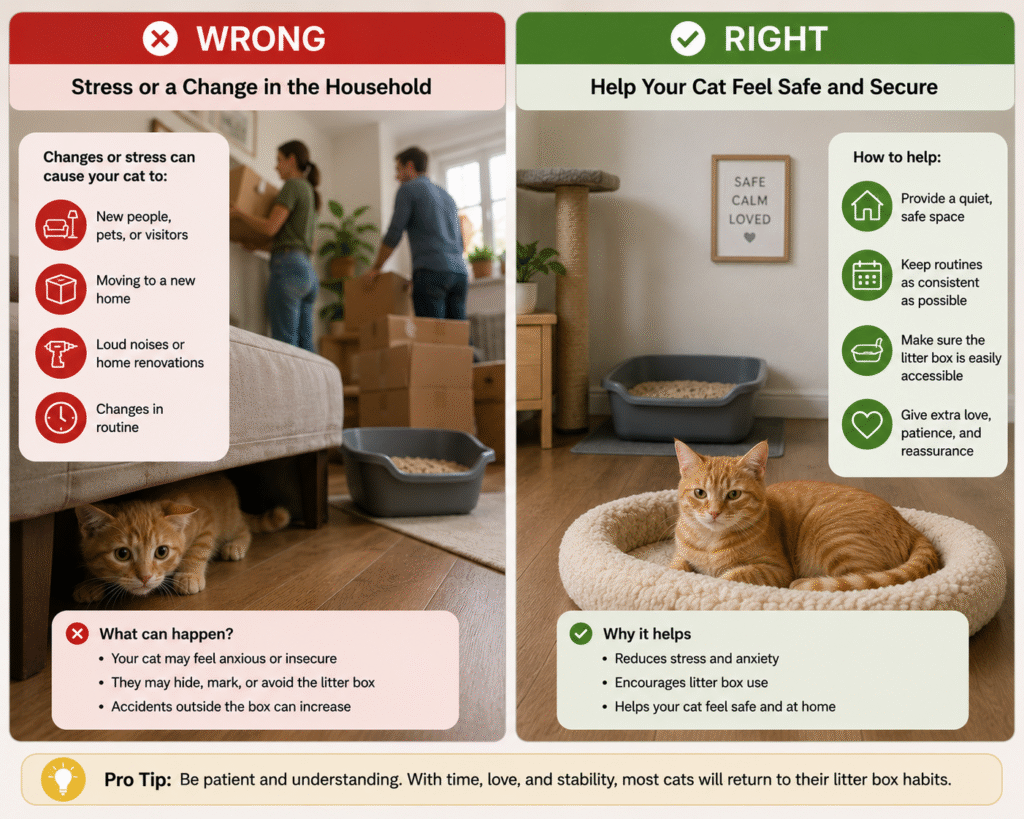
3. Stress or a Change in the Household
Cats are creatures of habit and disruptions such as a new pet, a new baby, houseguests, renovation work or even rearrange furniture can trigger enough anxiety to cause inappropriate urination. This is especially common in multi cat households where the social hierarchy is shifting. Giving your cat a predictable routine, quiet retreat spaces, and vertical territory like cat trees can reduce this stress considerably. Pheromone diffusers, such as a plug in synthetic feline pheromone product, are widely used by veterinarians and owners alike to help cats feel calmer in their environment during transitions.
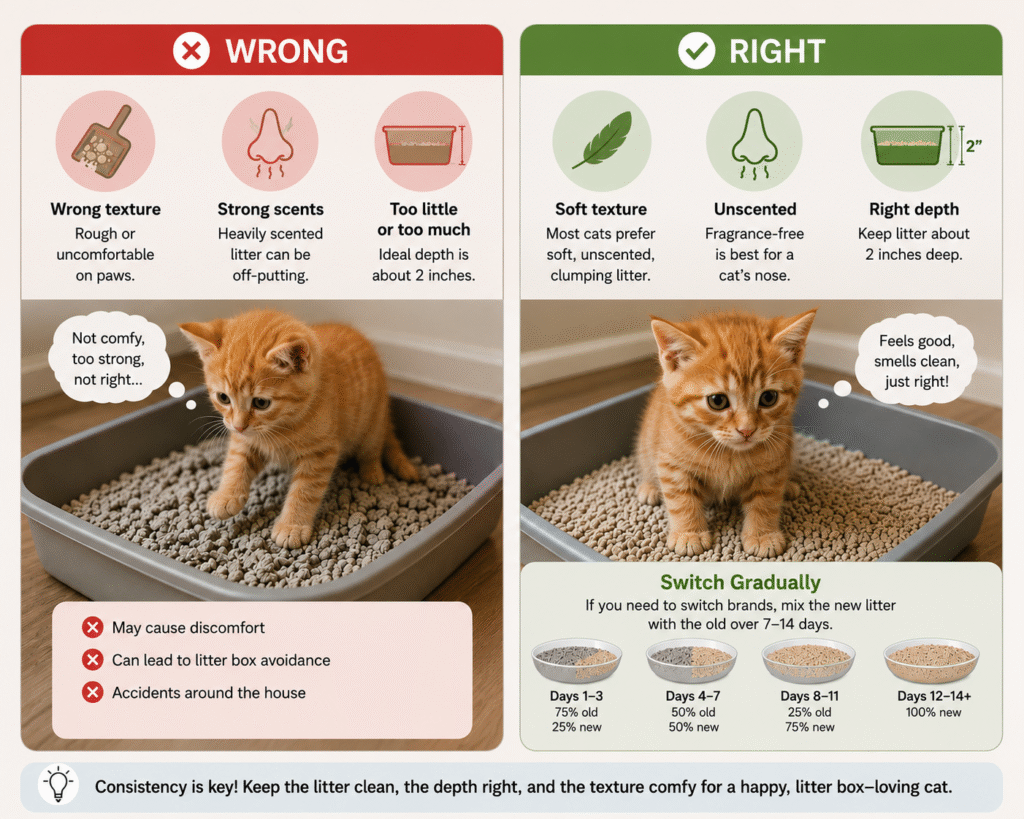
4. The Wrong Type or Depth of Litter
Some cats are surprisingly picky about the texture of litter under their paws and switching brands or types abruptly can be enough to send them elsewhere. Heavily scented litters can also be off putting to a cat’s sensitive nose. In general, most cats prefer a soft, unscented, clumping litter kept at a depth of about two inches. If you need to switch brands, do it gradually by mixing the new litter with the old over a week or two rather than swapping it all at once.
5. Not Enough Litter Boxes for the Number of Cats
A well known rule among veterinarians is that a household should have one litter box per cat plus one extra. In homes with two or three cats sharing a single box, competition and territorial guarding can easily develop, leading one or more cats to avoid the box altogether. Spreading additional boxes across different rooms, rather than lining them all up in one spot, gives every cat a low stress option and often resolves the issue within days.
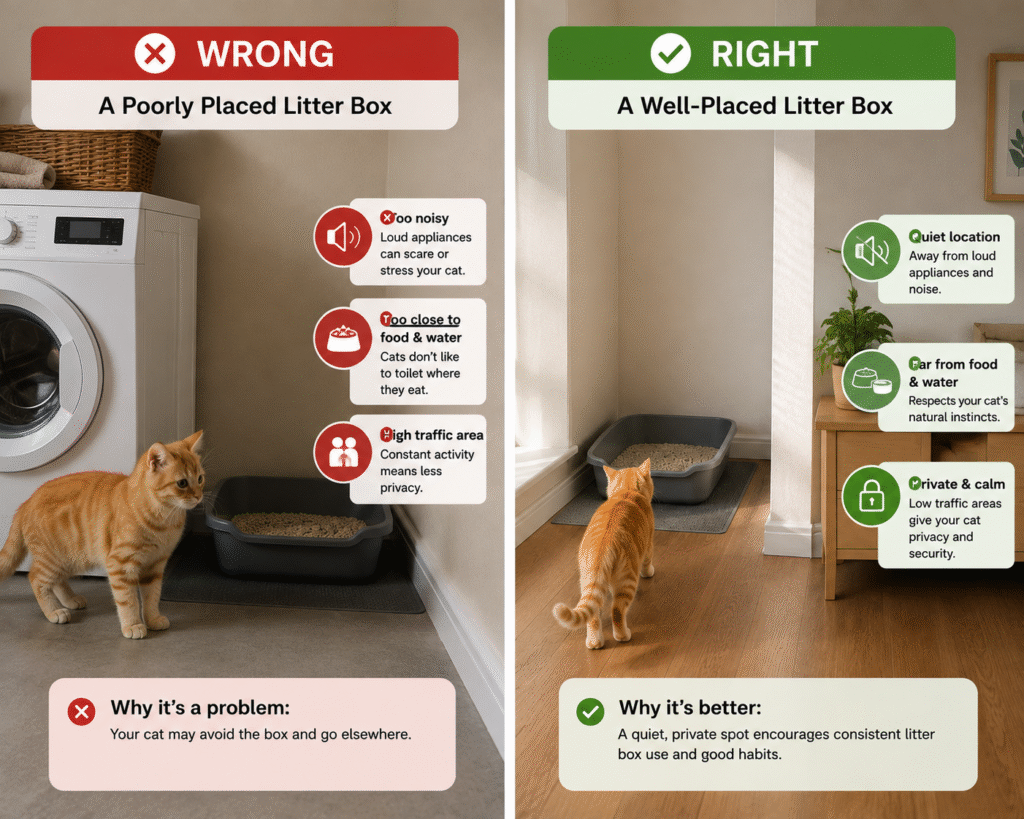
6. A Poorly Placed Litter Box
Location matters just as much as cleanliness. A box tucked in a noisy laundry room next to a rumbling washing machine or placed in a high traffic hallway, can feel unsafe to a cat who wants privacy while eliminating. Cats also dislike having their food and water bowls too close to their bathroom area. Choose a quiet, accessible spot away from loud appliances and foot traffic and make sure the box is easy to reach, particularly for kittens, senior cats or cats with mobility issues.
7. Marking Behavior Rather Than a Litter Box Problem
Urine marking is different from ordinary elimination and it usually shows up as small amounts of urine sprayed on vertical surfaces like walls, curtains, or furniture rather than puddles on the floor. This is often driven by an unneutered or unspayed status, the presence of an unfamiliar cat outside a window or general territorial stress. Spaying or neutering resolves marking in the large majority of cases, and cleaning marked areas thoroughly with an enzymatic cleaner prevents your cat from being drawn back to the same spot by lingering scent.
8.Lingering Odor From a Previous Accident
Even after you think you have cleaned up an accident, standard household cleaners often fail to fully break down the proteins in cat urine, leaving a scent trail that is invisible to humans but very obvious to a cat’s nose. This residual smell can encourage repeat visits to the same spot. An enzymatic cleaner formulated specifically for pet urine, such as this well-reviewed Eco Strong Stain and Odor Eliminator, breaks down those compounds at a molecular level rather than just masking the smell, which is essential for breaking the cycle.
Final thoughts
Solving the mystery of why your cat is peeing outside the litter box usually comes down to careful observation and a little detective work. Start by ruling out medical causes with a veterinary visit, since this step protects your cat’s health and saves you from chasing a behavioral fix for a physical problem. From there, take an honest look at the number, placement, and cleanliness of your litter boxes, consider whether anything in the household has recently changed and clean any soiled areas with an enzymatic cleaner so old scent trails do not pull your cat back to the wrong spot. Once you address the underlying cause, most cats will return to consistent litter box use, and with a bit of patience, you can put an end to the unwanted accidents for good.
If you have a new kitten, good litter habits start with proper training. Read our previous blog, How to Litter Train a Kitten in 5 Simple Steps, for an easy step by step guide.