
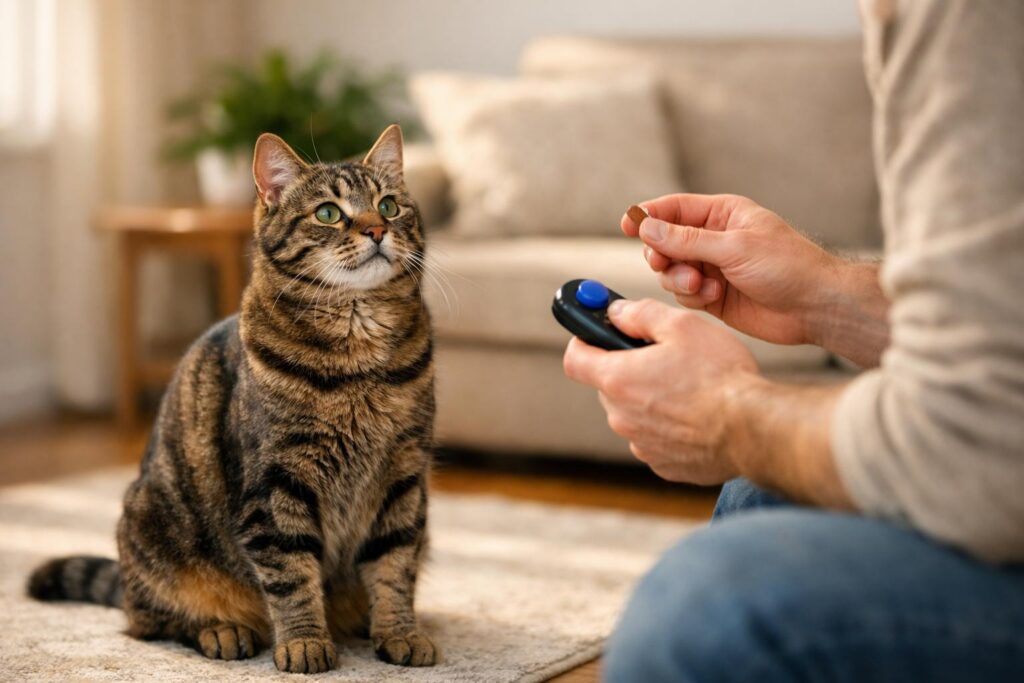
Can You Really Teach a Cat Tricks?
Have you ever looked at your cat lounging on the sofa and wondered whether you could actually teach them something? Maybe you’ve seen dogs performing impressive tricks and thought your independent little feline would never cooperate. Well, here’s some exciting news: cats are much smarter than many people realise, and with the right approach, they can learn some surprisingly impressive tricks!
Clicker training for cats is a fun, gentle and effective way to encourage positive behaviour while strengthening the bond you share with your furry companion. Instead of forcing your cat to follow commands, this technique turns learning into an enjoyable game filled with rewards, curiosity and encouragement. Whether you’re hoping to teach your kitten to sit or want your older cat to learn a high-five, clicker training can make the experience rewarding for both of you.
What Is Clicker Training for Cats?
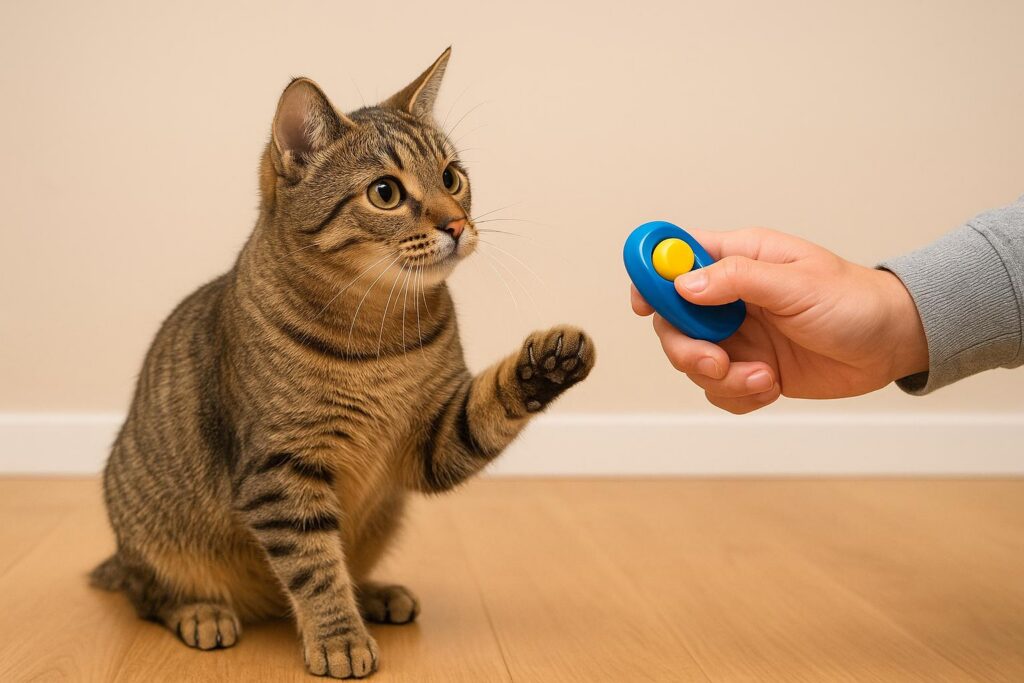
Clicker training is a positive reinforcement technique that uses a small handheld device to produce a distinctive clicking sound. This sound helps your cat understand exactly when they’ve performed a behaviour you want to encourage. Each time your cat does something correctly, you press the clicker and immediately offer a small treat. Over time, your cat begins to associate the clicking sound with a positive reward, making it easier for them to understand what you’re asking. Think of the clicker as a way of telling your cat, “Yes! That’s exactly what I wanted!” The beauty of this method is that it encourages your cat to participate willingly rather than relying on punishment or pressure.
Why Is Clicker Training Good for Cats?
Clicker training isn’t just about teaching your cat adorable tricks that impress your friends. It also provides valuable mental stimulation, particularly for indoor cats who may spend much of their day sleeping or watching the world through a window. Learning new behaviours encourages your cat to think, solve problems and explore different ways of earning rewards. Training can also help build confidence in shy cats by introducing manageable challenges in a safe environment. Perhaps most importantly, it creates opportunities for positive interaction between you and your cat. When your feline friend learns that spending time with you leads to enjoyable experiences, your relationship can become even stronger.
What Do You Need to Start Clicker Training?
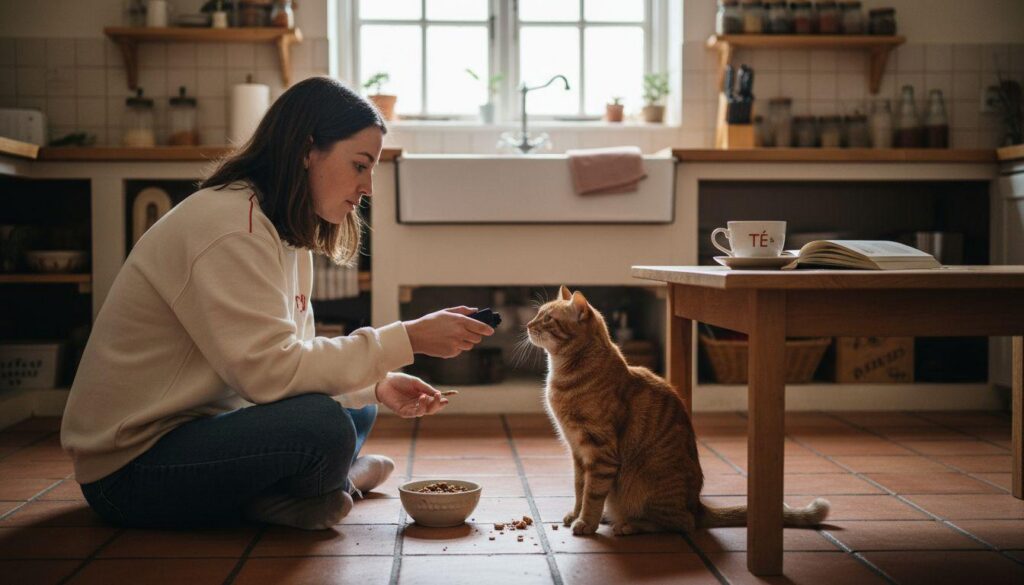
One of the best things about clicker training is that you don’t need expensive equipment or professional experience to get started. A simple training clicker, a few small cat-friendly treats and a quiet room are usually enough. Choose rewards that your cat genuinely loves, whether that’s tiny pieces of a favourite treat or a portion of their regular food. The rewards should be small enough for your cat to eat quickly without interrupting the training session. Make sure your training area is free from unnecessary distractions, especially during the early stages. You can also introduce a target stick or treat pouch as your cat progresses, but these aren’t essential for beginners. Remember to include training treats in your cat’s daily food allowance to avoid overfeeding.
Amazon recommendation: Pet Training Clicker with Wrist Strap
Step 1: Help Your Cat Understand the Clicking Sound
Before teaching your cat any tricks, the first step is helping them understand that the clicking sound predicts something positive. Find a peaceful moment when your cat is relaxed and interested in food. Sit nearby, press the clicker once and immediately offer a small treat. Repeat this simple process several times without asking your cat to perform any particular behaviour. At first, your cat might look confused, but after a few repetitions, you may notice them turning towards you whenever they hear the click. That’s an encouraging sign that they’re beginning to associate the sound with a reward. Keep these first sessions short and enjoyable, and always follow a click with a treat. If the noise frightens your cat, try a quieter clicker or use a consistent marker word instead.
Step 2: Teach Your Cat to Sit on Command
Teaching your cat to sit is one of the easiest ways to begin practising clicker training because sitting is something cats already do naturally. Start by watching your cat carefully and waiting for them to sit voluntarily. The moment their bottom touches the floor, press the clicker and offer a treat. Repeat this whenever the opportunity arises so your cat begins connecting the sitting position with receiving a reward. Once they start sitting more consistently during training, introduce the verbal cue “sit” just before you expect the behaviour. With patience and repetition, your cat may begin responding to the word alone. Avoid physically pushing them into position, as this can make training stressful. Instead, allow your cat to discover that sitting voluntarily leads to something enjoyable.
Step 3: Teach Your Cat to Give a High Five
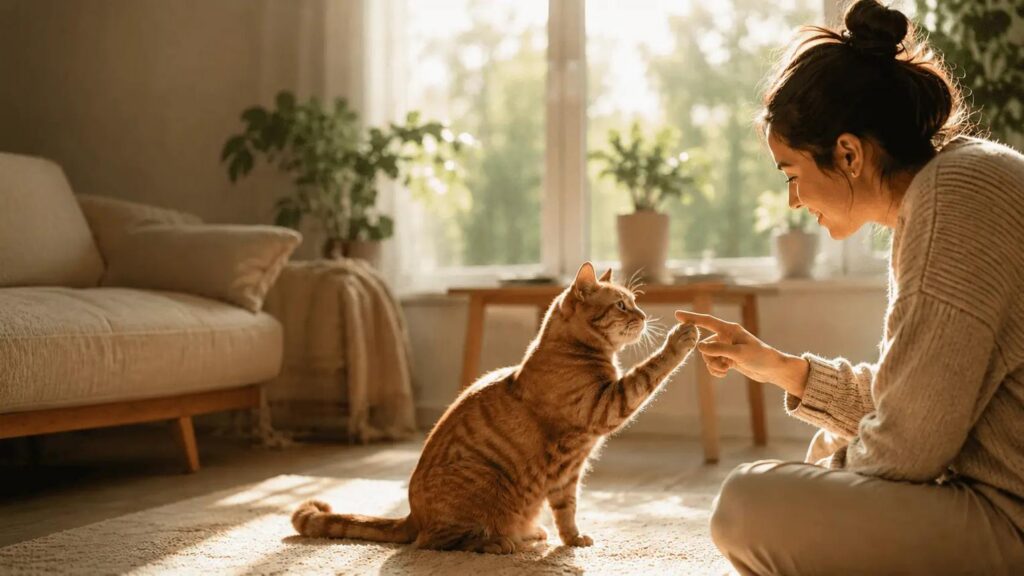
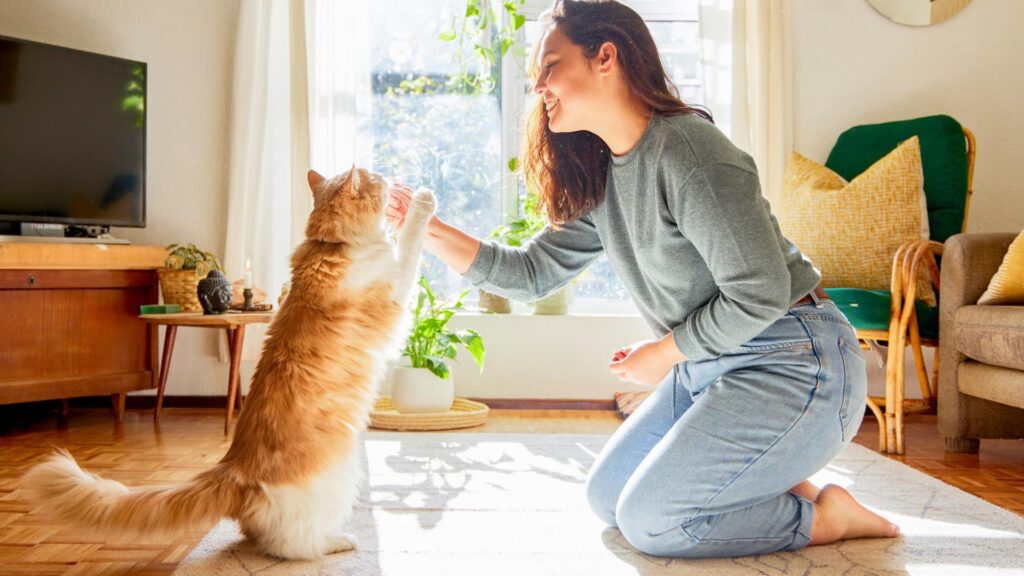
Imagine sitting on your sofa, holding out your hand and watching your cat confidently lift a paw to give you a high-five. It sounds adorable, doesn’t it? Fortunately, this trick is possible with gradual training. Begin by holding a small treat inside your closed fist and allowing your cat to investigate. Some cats will naturally try touching your hand with a paw. The moment this happens, click and offer the reward. Repeat the exercise until your cat starts using their paw more consistently. Next, gradually change your hand position until your palm is facing your cat. Reward even small attempts at touching your palm, and eventually introduce the verbal cue “high-five.” The secret is to encourage natural paw movements without forcing your cat’s leg into position. Every little improvement deserves encouragement.
Step 4: Use Target Training to Teach New Tricks
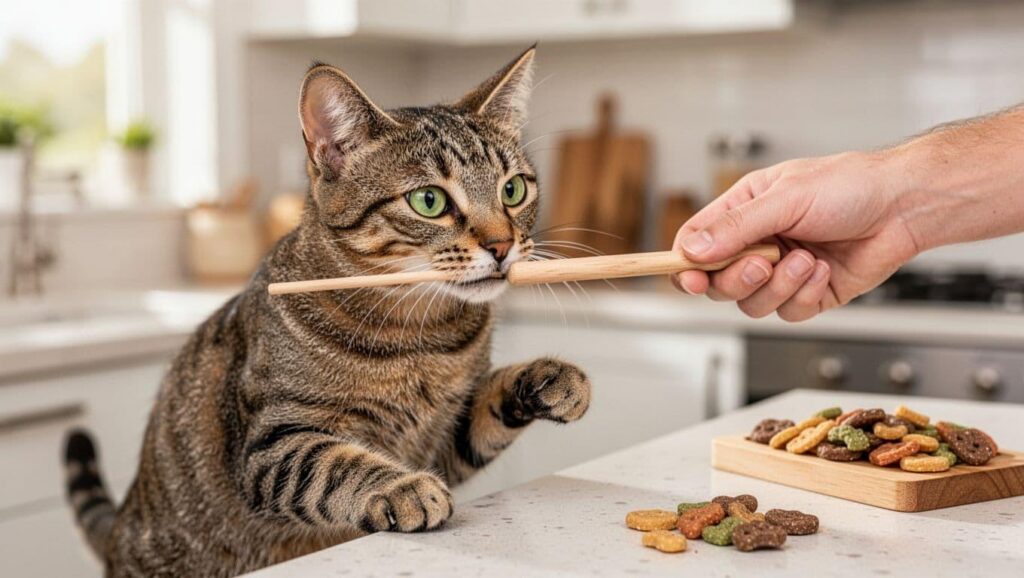
Once your cat understands basic clicker training, target training can open the door to many other exciting activities. This technique involves teaching your cat to touch a particular object, such as the end of a target stick, with their nose. Begin by holding the target a short distance from your cat’s face and waiting for them to investigate it. When their nose touches the target, click and provide a treat. After several successful attempts, gradually move the target slightly farther away so your cat has to take a small step towards it. As their confidence improves, you can use the target to guide them through simple movements, onto a training mat or towards their travel carrier. Target training is particularly useful because it helps your cat understand new behaviours through curiosity and positive reinforcement.
Amazon recommendation: Cat Clicker Training Target Stick
Step 5: Teach Your Cat to Come When Called
Wouldn’t it be wonderful if your cat actually came running when you called their name? Although cats sometimes seem determined to ignore us, recall training can become a useful everyday skill. Start in a quiet room with your cat only a short distance away. Say their name or use a consistent recall cue in a friendly voice. When they move towards you, click at the moment they respond and immediately reward them. Practise several times before gradually increasing the distance between you and your cat. As they become more confident, try calling them from different areas of the house. Avoid using your recall cue immediately before something unpleasant, such as administering medication, because this can weaken the positive association. For more detailed advice, read our CatPurr guide on How to Train a Cat to Come When Called (Yes, It’s Possible).
How Long Should a Cat Clicker Training Session Last?
When it comes to training cats, shorter sessions are usually more effective than long, repetitive lessons. Most beginners should aim for approximately two to five minutes per session, depending on their cat’s interest and attention span. You might find that your cat is enthusiastic for the first few minutes but then suddenly decides that staring out of the window is more interesting. That’s perfectly normal! Rather than pushing them to continue, finish the session on a positive note while they’re still engaged. You can practise once or twice daily or whenever your cat seems interested. Consistency matters more than the length of each session, and even tiny improvements are worth celebrating.
Common Clicker Training Mistakes to Avoid
One mistake many beginners make is clicking too late, which can accidentally reward the wrong behaviour. For example, if you’re teaching your cat to sit but click after they’ve already stood up, they may struggle to understand what earned the reward. Another common mistake is repeating commands too frequently before your cat has learned what those words mean. Try to introduce one skill at a time and allow your cat to progress gradually. Never shout, punish or physically force your cat to perform a trick, as this can damage their trust and make training unpleasant. If your cat becomes distracted, frustrated or uninterested, simply take a break. Training should feel like a fun activity rather than an obligation.
Can Older Cats Learn Clicker Training Too?
Absolutely! While kittens are naturally curious and often enthusiastic about exploring new activities, adult and senior cats can also learn through positive reinforcement. Older cats may need slightly more time to become comfortable with unfamiliar exercises, particularly if they’ve never experienced formal training. The important thing is to adapt your approach to their individual personality and physical abilities. For example, a senior cat with joint discomfort might prefer simple nose-targeting activities rather than tricks that require jumping or standing on their hind legs. Choose comfortable exercises, offer plenty of encouragement and remember that learning should always support your cat’s wellbeing.
Best Cat Training Products to Make Learning Easier
Having a few useful accessories can make your training routine more enjoyable. A basic clicker provides a consistent sound that helps your cat recognise successful behaviour, while a target stick is helpful when introducing more advanced tricks. Small, tasty treats are essential for keeping your cat interested, and a lightweight treat pouch can make rewards easier to access at the right moment. Interactive toys can also provide opportunities for play and mental enrichment between lessons. You don’t need to purchase everything at once; begin with the essentials and introduce additional items as your cat develops new skills.
Amazon recommendations: Interactive Feather Wand Toy.
Final Thoughts: Every Cat Can Surprise You!
Clicker training for cats is about much more than teaching clever tricks. It’s an opportunity to understand your cat better, encourage their natural curiosity and enjoy meaningful moments together. Some cats might learn to sit after a few short sessions, while others may need more practice before confidently offering a high-five. Both journeys are worth celebrating because every cat is unique. The most important things are patience, consistency and making each experience enjoyable.
So grab a clicker, prepare a few tasty treats and see what your feline friend can learn. You might discover that the cat who usually ignores your requests is secretly a talented little student!
Have you ever tried clicker training your cat? Tell us in the comments which trick you’d love to teach first sitting, high five or coming when called. We’d love to hear about your training adventures!