
Suddenly, your sweet, cuddly companion has vanished under the sofa like a tiny furry magician. Sound familiar?
For many cat owners, getting a cat into a carrier feels more challenging than the actual journey. There’s frantic hiding, desperate meowing, and occasionally a few unexpected scratches, but here’s what most people don’t realise your cat isn’t being stubborn. They’re probably scared. The good news? You don’t have to spend every vet appointment chasing your cat around the house.
Learning how to get a cat into a carrier without a battle is easier when you understand what your cat needs to feel safe. With patience, a little preparation and some surprisingly simple tricks, even a nervous cat can learn to feel more comfortable with their carrier.
1. Why Does Your Cat Run Away the Moment They See the Carrier?
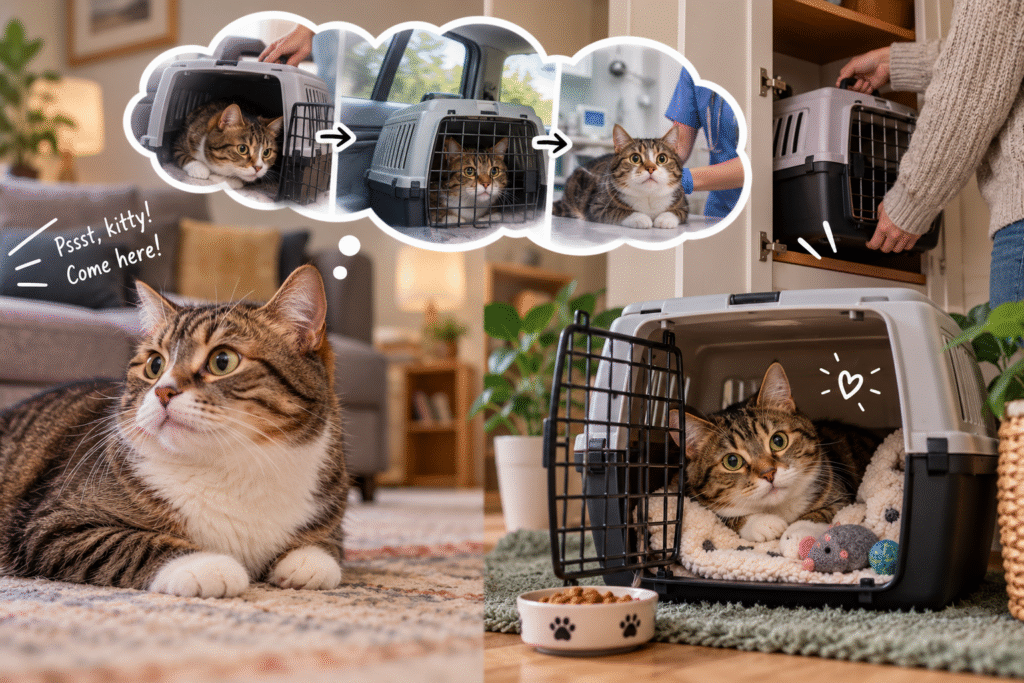
Have you noticed how your cat can ignore you calling their name but somehow hears the carrier being taken out of the cupboard, cats are clever at recognising patterns. If the only time your cat sees their carrier is before a stressful veterinary appointment, they may learn that the mysterious plastic box means something unpleasant is about to happen.
Think about it from their perspective. One minute, they’re enjoying a peaceful afternoon. The next, they’re inside a confined space, travelling in a noisy vehicle towards unfamiliar smells and sounds, no wonder they aren’t enthusiastic! The first step is changing what the carrier means to them. Instead of being a warning sign, it needs to become something familiar, comfortable and predictable.
2. The Biggest Mistake Cat Owners Make (And It’s Surprisingly Common)
Here’s a little question: where is your cat carrier right now? is it tucked away in a cupboard, hidden in the garage or collecting dust in a spare room?, If so, you’re definitely not alone.
Many owners only bring out the carrier when they need it. Unfortunately, this can make the carrier itself a signal that something stressful is coming.
Leave the carrier in a quiet corner of your home with its door open. Add your cat’s favourite blanket or a familiar-smelling towel, don’t immediately expect them to climb inside. At first, they might simply walk past it. Later, they could stop for a curious sniff. Eventually, they may decide to investigate, every tiny step counts. The more ordinary the carrier becomes, the less frightening it may feel.
3. Turn the Carrier Into Your Cat’s Favourite Little Hideaway
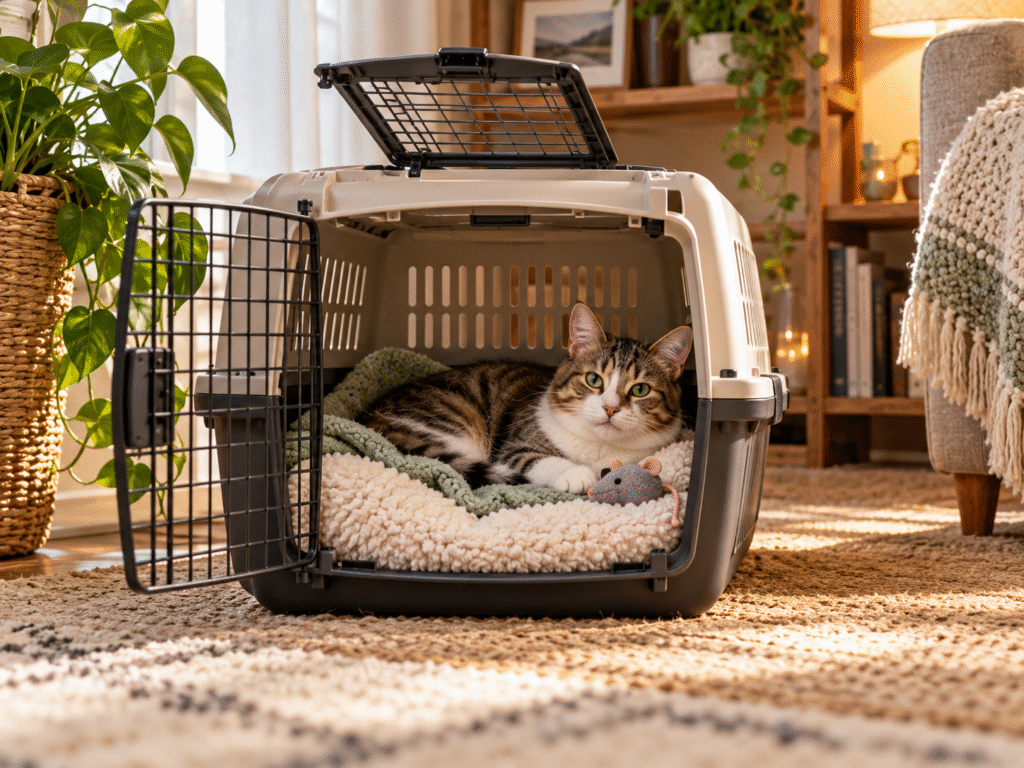
What if your cat actually wanted to spend time inside their carrier?, It sounds unlikely, especially if your cat currently treats it like their worst enemy. But cats naturally enjoy cosy, enclosed resting spots when they feel safe, choose a sturdy, well-ventilated carrier with enough room for your cat to turn around and lie down comfortably.
A model with both front and top access, such as a top-opening cat carrier on Amazon UK, can make handling easier, particularly for nervous cats, place soft bedding inside, perhaps along with a favourite toy.
If your cat enjoys sleeping in quiet corners, position the carrier somewhere peaceful rather than in a busy hallway. Here’s the important part: let your cat discover it independently, you want them thinking, “This looks like a nice place to relax,” rather than, “Why is my human trying to trap me?”
4. The Treat Trick That Makes Carrier Training Feel Like a Game
Let’s talk about one of the most useful tools in cat training: food, you probably know how quickly your cat appears when they hear their favourite treat packet. Why not use that enthusiasm to your advantage?
start by placing a treat near the carrier entrance. When your cat approaches, reward them and let them walk away, next time, put the treat just inside, gradually move the reward further towards the back as your cat becomes more confident.
You can use small training rewards or lickable cat treats to make these experiences enjoyable, don’t shut the door yet. During these early sessions, your cat should feel completely free to come and go. And here’s a small trick: stop the session while your cat is still comfortable. That way, tomorrow’s practice begins with curiosity rather than fear.
5. The Door-Closing Trick: Why Slower Is Actually Faster
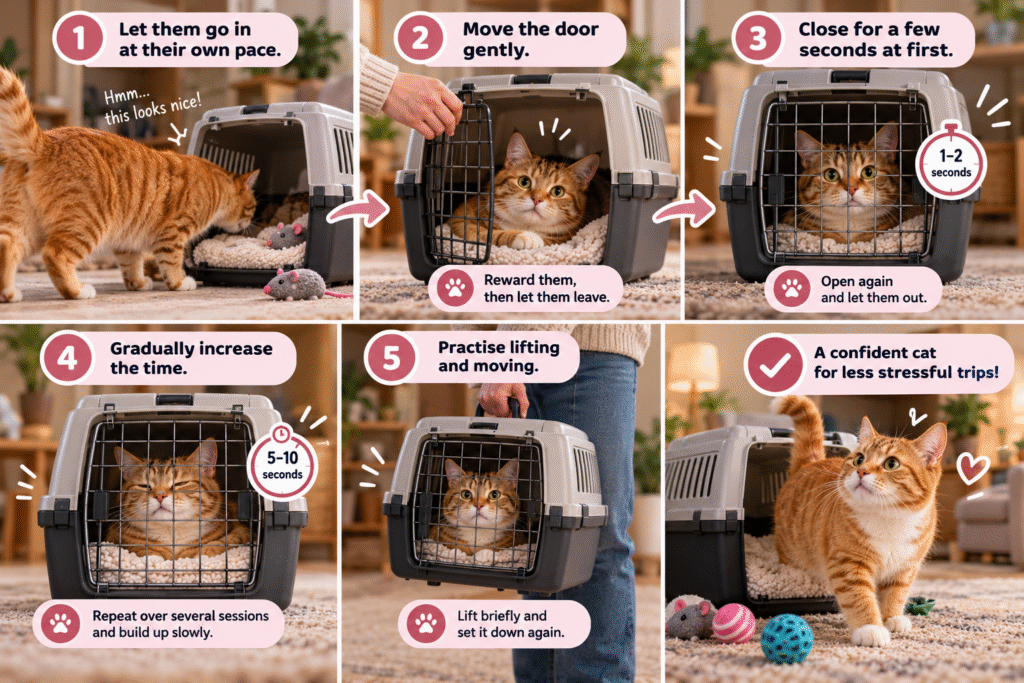
You’ve finally convinced your cat to walk inside the carrier. Success! but before celebrating by immediately shutting the door, remember that this is where many owners accidentally undo their progress.
Your cat needs to learn that a closed door doesn’t automatically mean something frightening will happen, start by gently moving the door while your cat is relaxed. Reward them, then let them leave, eventually, close it for just one or two seconds before opening it again.
Repeat over several sessions, gradually increasing the duration only when your cat remains comfortable. Once they’re happy with the closed door, practise lifting the carrier briefly and setting it down. It might feel like you’re progressing slowly, but building confidence now can save everyone a great deal of stress later.
6. What If Your Cat Absolutely Refuses to Go Inside?
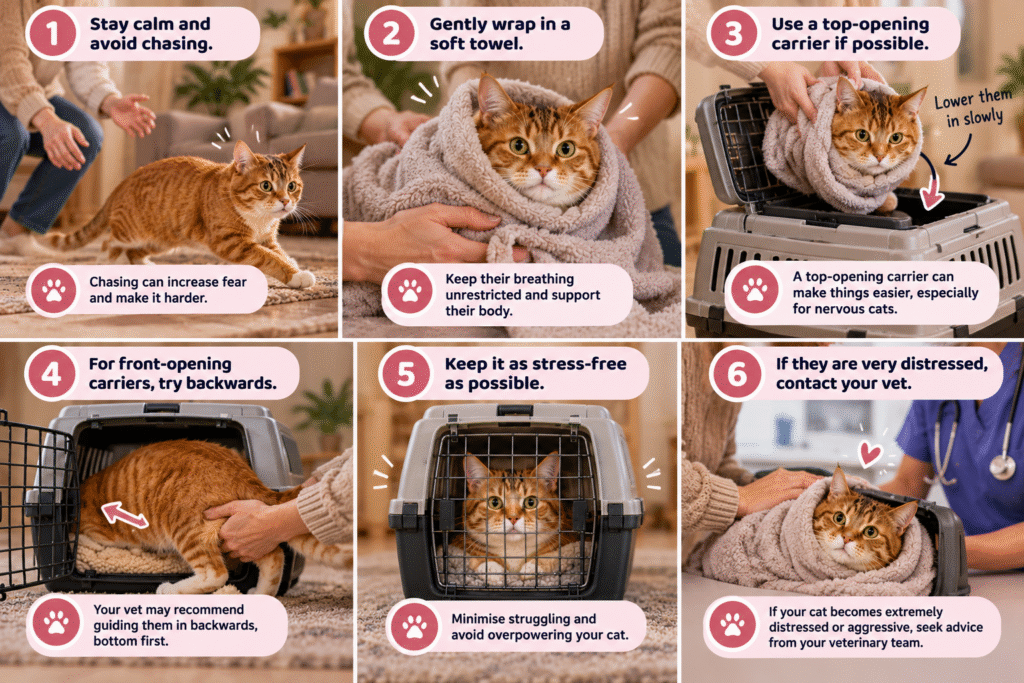
Picture this: you’ve been practising, but today there’s an urgent veterinary appointment, and your cat has decided the carrier is completely unacceptable.
What should you do?
First, avoid chasing them around the house. Turning the situation into a high-speed pursuit can increase their fear. A carrier with a removable top may make things easier.
For a necessary journey, you can gently wrap your cat in a soft towel, keeping their breathing unrestricted, then support their body while carefully lowering them through the top opening. If you’re using a front-opening carrier, your vet may recommend guiding them in backwards, bottom first.
The aim is to minimise struggling, not overpower your cat. If they become extremely distressed or aggressive, contact your veterinary team for advice. And remember: emergency handling is a backup plan, not a replacement for gradual training.
7. Don’t Forget What Happens After the Carrier Door Closes
Getting your cat inside is a big achievement, but there’s one more challenge: the journey itself. Cats can become unsettled by engine noises, unusual movements and unfamiliar surroundings.
Before travelling, place familiar, washable bedding inside the carrier. You can also cover part of it with a lightweight blanket, making sure ventilation remains clear.
A cat pheromone spray may help some cats feel more comfortable, although results vary. Follow the product instructions and allow the sprayed bedding to air before your cat enters.
Secure the carrier appropriately in the vehicle, following the manufacturer’s instructions. Never allow your cat to travel loose inside the car.If your cat shows severe anxiety or motion sickness, speak to your vet about additional support.
8. The Secret to Easier Vet Visits Starts After You Get Home
Here’s something many cat owners overlook. After surviving a stressful appointment, they immediately put the carrier back into storage. Unfortunately, that can restart the entire cycle.
Instead, clean the carrier if necessary, replace its bedding and leave it somewhere familiar. Occasionally place a treat inside. Let your cat investigate without being picked up or taken anywhere. These ordinary, uneventful moments help your cat learn that entering the carrier doesn’t always lead to a car journey.
Some cats become comfortable within a couple of weeks, while others need considerably longer. That’s perfectly fine. The goal isn’t to rush your cat. It’s to make the experience increasingly predictable and less frightening.
Final Thoughts: A Calm Cat Starts With a Little Trust
Getting a cat into a carrier doesn’t have to involve scratched arms, furniture-moving missions or a last-minute search beneath the bed.
The biggest difference comes from helping your cat feel safe before you ever need to travel. Leave the carrier out. Make it comfortable. Reward curiosity. Practise regularly, and don’t rush the difficult stages. Your cat might never become excited about visiting the vet, but they can learn that the carrier itself isn’t something to fear.
Here’s your little challenge for tonight take the carrier out, open the door and put one familiar blanket inside. That’s it. No forcing, no pressure.
Small beginnings can lead to much calmer journeys.Want to teach your cat another surprising skill? Discover our guide to training a cat to come when called.