
You notice your cat scratching again, then you spot a tiny dark speck in their fur. Now you want to know how to get rid of fleas on cats, and you want it done fast. The short answer is simple. You must treat your cat and your home at the same time, because the fleas you can see are only a small part of the problem. Cat fleas are easy to miss and hard to clear, so this guide walks you through each step in the order that works. If your cat has a long coat, our guide to grooming a long-haired cat at home also helps with combing.
Quick answer: To get rid of fleas on cats, treat every pet in the house on the same day with a flea product your vet recommends. Then wash bedding at 60°C, vacuum often and spray your home. Expect it to take a few weeks.
How do you know your cat has fleas?
Fleas are hard to see, so look for the signs they leave behind. The PDSA lists these:
- Scratching, nibbling at the back end or over-grooming
- Bald patches or rough, spiky fur
- Sore skin, bites or a rash
- Flea dirt, often on the lower back
Fleas are most common from April to September, but any cat can pick them up. Indoor cats are at risk too, because fleas can arrive on people and clothing, according to Cats Protection. Part your cat’s fur around the base of the tail and the lower back, and look closely.
How to get rid of fleas on cats: start with your cat
Phone your vet first. Vets can prescribe flea treatments that work better than most shop products. The PDSA says off-the-shelf products often contain weaker ingredients. Ask your vet for a prescription product, or an NFA-VPS product, which you can buy without a prescription. If your cat had a recent check-up, you can usually collect a flea product without an appointment.
Then follow these steps:
- Treat your cat and every other cat, dog and rabbit in the house on the same day.
- Use the product your vet recommends and follow the label for your cat’s age and weight.
- Worm your cat at the same time, because fleas can spread worms.
- Comb your cat daily with a flea comb, working through the neck, armpits and base of the tail.
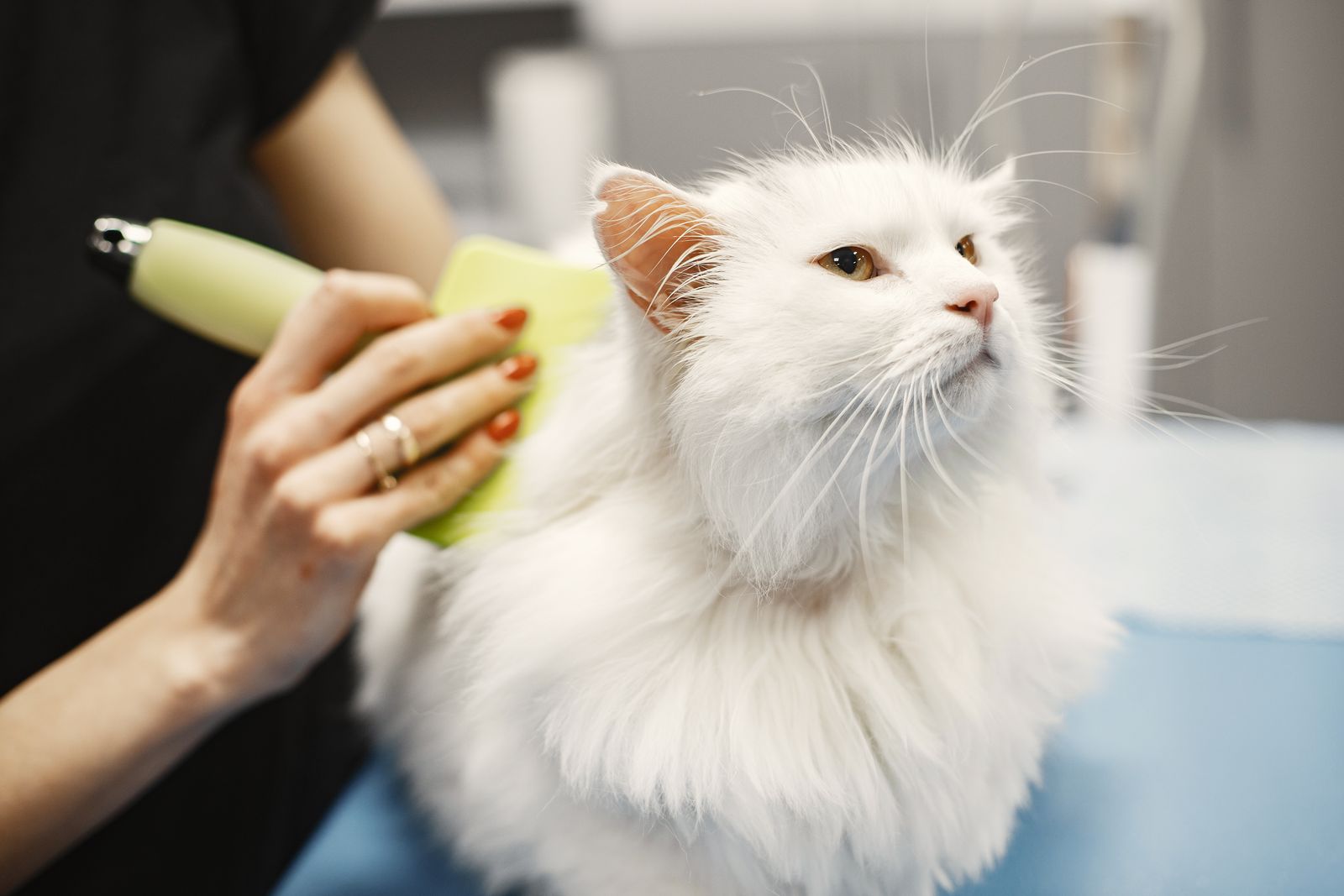
A flea comb will not clear an infestation on its own. It does show you how bad the problem is, and it helps you check that your treatment works. Wipe the comb on kitchen roll after each stroke so you can see what it catches. If your cat has a thick coat, our guide to cat shedding has more tips on combing without a fight.

Masterclip Flea Comb
A fine-toothed stainless steel comb that catches fleas and flea dirt, so you can see whether your treatment is working. Rated 4.5 stars from over 9,800 reviews (checked 14 October 2026).
Treat your home as well as your cat
This step decides whether the fleas come back. The PDSA says 95% of a flea problem lives in the home. Fifty fleas on your cat can mean up to 1,000 fleas and eggs around the house, and they can survive for up to a year.
Cats Protection explains why. An adult flea starts laying eggs within 48 hours of finding a host, and a female lays 25 to 50 eggs a day. The eggs hatch in two to five days. The pupae can stay dormant for up to six months in carpets and soft furnishings. That is why a flea problem can seem to return after you thought it was over.
Clean your home in three ways:
- Wash bedding at 60°C. This covers your cat’s beds, blankets and any soft toys they sleep on.
- Vacuum often. Reach into crevices, sofas, carpets and pet bedding. Empty the canister or throw away the bag outside as soon as you finish.
- Use a household flea spray. Spray carpets and soft furnishings, follow the label and keep your cat out of the room during treatment. Ask your vet which spray to buy.

Shark Cordless Handheld Vacuum with Pet Tool
A small cordless vacuum reaches sofa seams, skirting boards and stairs, where eggs collect. Rated 4.5 stars from over 7,300 reviews. Empty it outside straight after each use.

FEANDREA Washable Cat Bed (Medium)
A soft bed that goes in the washing machine. Rated 4.4 stars from over 680 reviews. Check the care label first, because not every bed survives a 60°C wash.
What to avoid when you treat fleas on cats
Never put a dog flea treatment on your cat. Never put a household flea spray on your cat either. The PDSA warns that many of these products contain permethrin, which is extremely poisonous to cats. If your cat touches one, call your vet straight away.
The PDSA also says flea shampoos generally do not kill fleas well, and many flea collars work poorly. Ask your vet before you buy either one.
Mistakes that bring the fleas back
Most flea problems return for the same few reasons. Check this list before you try again:
- Treating only your cat. The eggs and pupae in your carpets keep hatching, so new fleas jump back on.
- Skipping the other pets. One untreated dog or rabbit can keep the cycle going, which is why the PDSA says to treat them all on the same day.
- Stopping when you stop seeing fleas. Fleas are hard to spot, and dormant pupae can hatch weeks later.
- Washing one bed and forgetting the rest. Blankets, cushions and sofa throws can hold eggs too.
- Using a product from a dog. It will not help your cat, and it can poison them.
When to see a vet
Book an appointment if you notice any of these:
- Your kitten has fleas, because a heavy infestation can cause anaemia from blood loss
- Your cat has sore, infected skin or patches of hair loss
- Your cat has not been examined for a while
- Your cat has touched a dog flea treatment or a household spray
- Fleas keep returning after several weeks of treatment
This is general guidance and not a substitute for advice from your vet.
Common questions about how to get rid of fleas on cats
Can indoor cats get fleas?
Yes. Fleas can ride in on your clothes, shoes or another pet. Cats Protection says indoor kittens still need flea treatment for this reason.
How long does it take to get rid of fleas on cats?
The PDSA says it takes a few weeks to clear a flea problem. Pupae can stay dormant for months, so keep treating your cat as often as your vet recommends, even when you stop seeing fleas.
The two-part rule to remember
If you remember one thing about how to get rid of fleas on cats, make it this: treat your cat and your home on the same day. A treated cat in an untreated house will pick up new fleas as the eggs hatch. Pick up a product from your vet, wash the bedding tonight and start combing tomorrow.
Want more care tips like this? Join the CatPurr newsletter or follow us on Instagram at @catpurr.uk.