
Bringing another cat home can certainly be an exhilarating experience for you, but your cat might not be as excited about it. Cats can be extremely territorial, which means that they are protective of the places that they like to hang out at and where they usually sleep. Forcing two cats to be together can result in fights and even aggression between them.
What is important to remember is that the cats need to meet gradually. Cats get used to other cats through sight, smell and touch. The cats can become friends quickly, but they can also need some time to get used to one another.
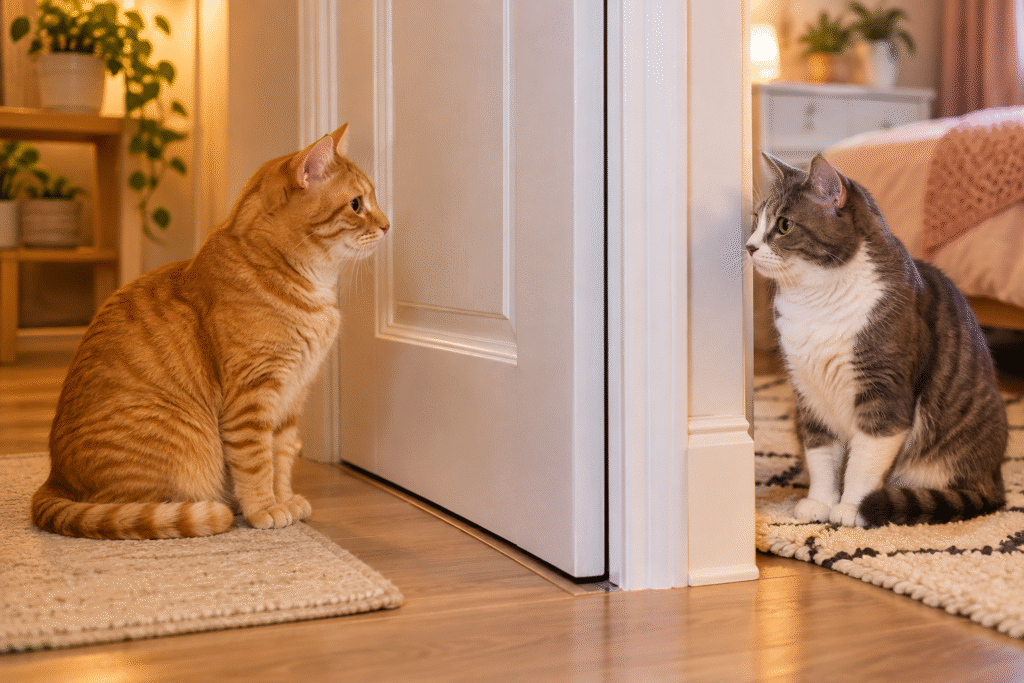
Why You Should Never Rush Two Cats Into Meeting
The biggest mistake to make when trying to introduce two cats is to let them meet each other’s face on. For the resident cat, a new cat appears in the space where the cat has all its vital things such as food, sleep spots, toys, and litter boxes. Even the most friendly cat might turn defensive when its territory is invaded.
Slight hissing should not be considered a failure. However, frequent chasing, swatting, staring, or attempts to prevent another cat from getting the important resources could mean that either of the cats is uncomfortable with the situation.
The idea of how to introduce two cats without fighting should not be aimed at making them friends right away. The main objective here is to make the presence of another cat a regular and normal thing.
Start With a Separate Safe Room
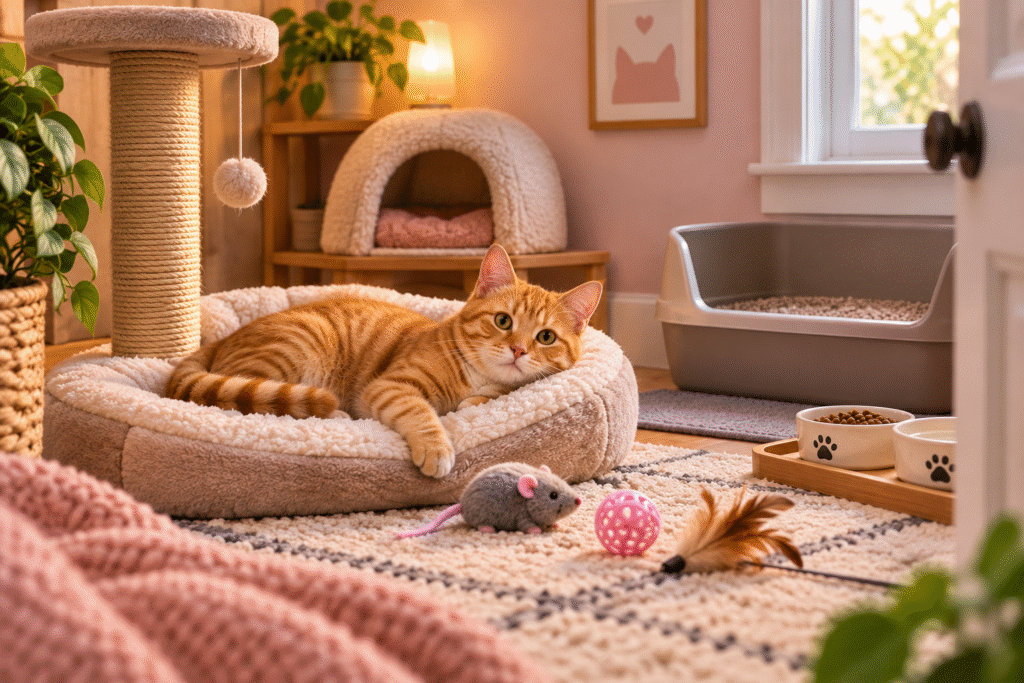
Prior to introducing your new cat, set up a separate space for them. This should have everything the cat requires including a comfy bed, a hiding spot, scratching post, some toys, some food, water, and a litter box which is located away from where they eat.
Initially, keep the door closed. Your existing cat will have access to his own space while the new cat gets used to the surroundings. This separation is not meant as punishment; rather, it lets both the cats get acquainted with each other without having to come into contact.
If either cat appears particularly unsettled, you may also consider using a calming pheromone diffuser for introducing two cats, such as a FELIWAY Friends or MultiCat diffuser. Place it in the main area where the cats spend their time and follow the manufacturer’s instructions.
Let Them Meet Through Scent First
Smell is very important for cats, which is why exchanging scents is one of the most effective steps of a slow cat introduction process.
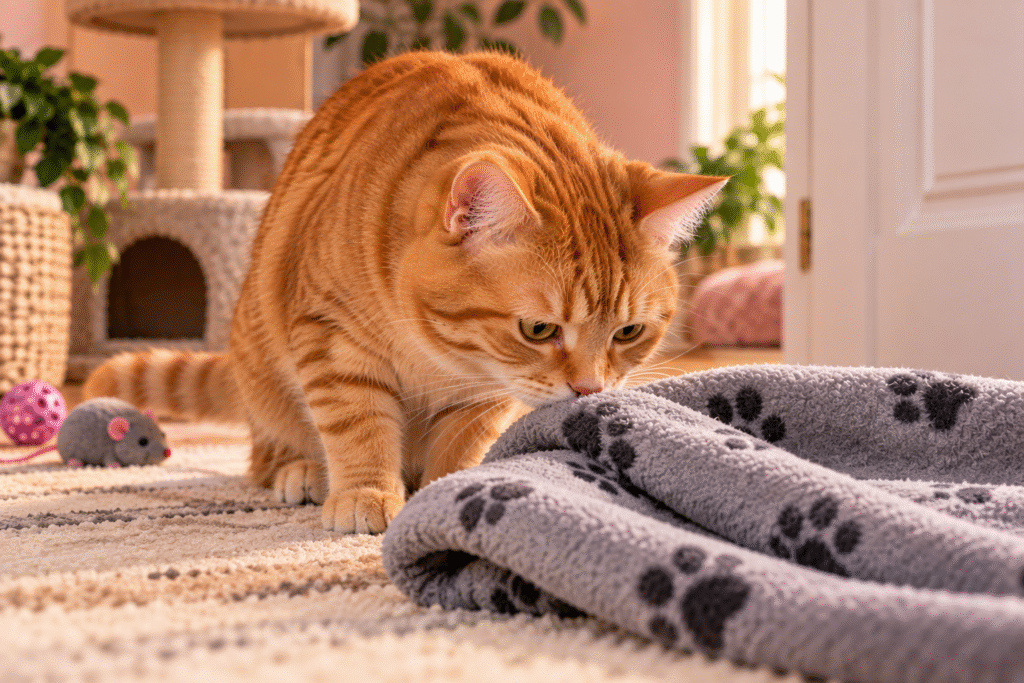
Using a clean and soft towel, lightly rub the cheeks and forehead of the first cat when it is relaxed. Put the towel where the second cat lives and let the cat explore it. Repeat with the second cat.
You can also swap small blankets or bedding between their rooms. A soft cat blanket for scent swapping can be useful because each cat’s scent naturally collects on the fabric while they sleep. After they have used the blankets for a while, exchange them so each cat can investigate the other’s scent without direct contact.
Don’t push the blanket or cloth towards either cat’s face. Simply place it somewhere accessible and let the cat decide whether to approach.
Build Positive Associations Around the Closed Door
Once both cats have begun to get used to the setup, begin making some positive associations happen when they are separated by the closed door. Interact with one cat at a time and provide some sort of treat or activity when there is a cat on the other side of the door.
This way, the perception of the other cat begins to shift from another potentially dangerous presence to something associated with good experiences.
Do not proceed just because things went well in one attempt. A few calm attempts will be much more beneficial than a rushed and frightening introduction.
Allow Them to See Each Other Safely
When the two cats have got used to swapping their scent and seem comfortable around each other when separated by the dividing door, it will be time to start making controlled visual introductions.
Using a suitable pet barrier for introducing two cats can come in handy at this point. The use of a high mesh screen or pet barrier ensures that the cats can see and smell each other without having direct physical interaction.
Ensure that the pet barrier used is suitable for cats and secure because cats are very good climbers and jumpers. You can therefore need to ensure that the barrier is high enough.
The first visual introductions should be brief with adequate space provided for both cats.

Move to Short, Supervised Meetings
When your cats can comfortably see one another through the barrier without persistent aggression or fear, you can begin very short supervised meetings.
Choose a spacious room and ensure both cats have clear escape routes. Never hold one cat and carry them towards the other. Each cat should have control over whether they approach, remain at a distance or leave.
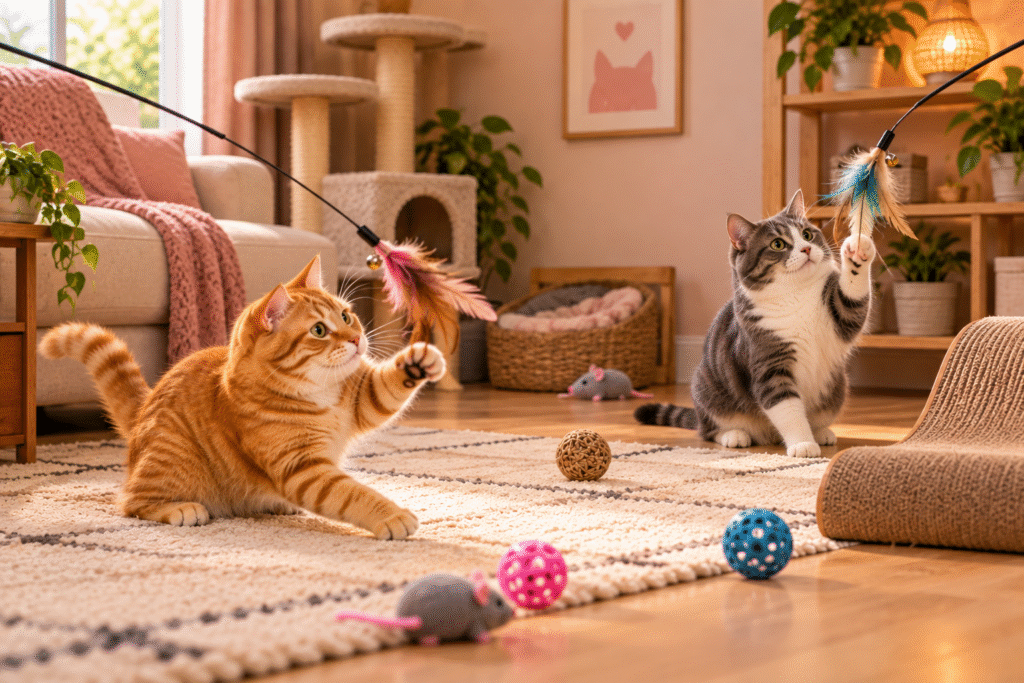
An interactive cat toy for introductions, such as a feather wand, can sometimes provide an alternative focus during appropriate supervised sessions. Playing separately with each cat can help prevent them from becoming completely fixated on one another.
If either cat becomes increasingly tense, end the interaction calmly and return to an earlier stage rather than waiting for a fight to happen.
Give Each Cat Their Own Resources
Even when the initial introduction is going well, competition over resources can create tension later.
Each cat should have easy access to important resources, including feeding areas, water, comfortable sleeping locations, scratching areas, hiding places, and litter trays. Spread these resources around your home rather than placing everything together in one location.
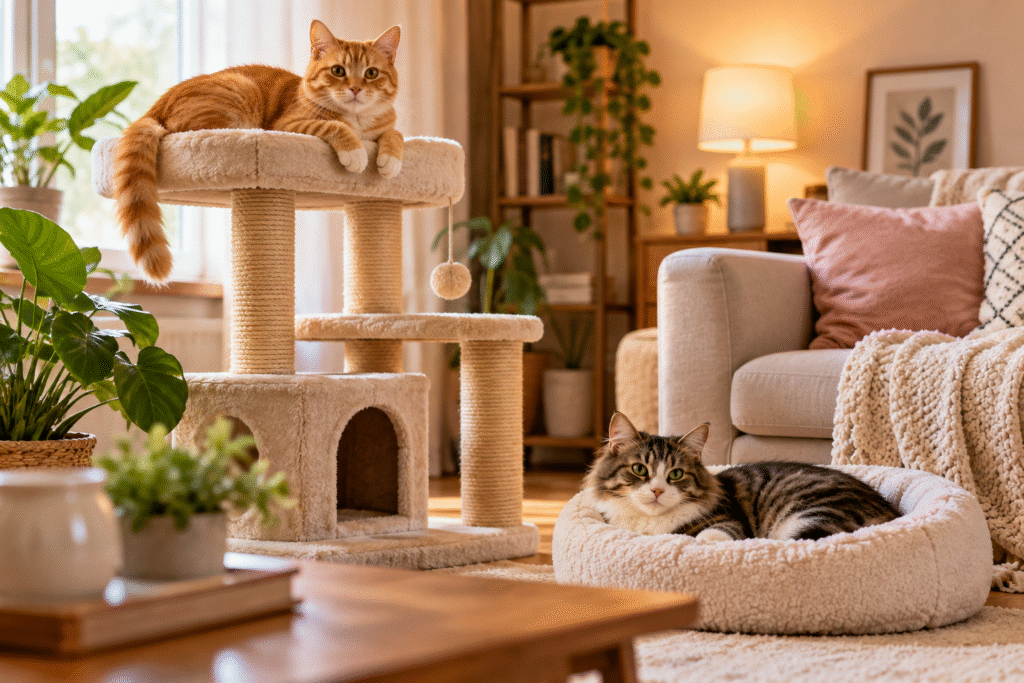
Vertical territory can be especially helpful in a multi-cat home. A multi-level cat tree for two cats provides additional resting and observation spaces, allowing one cat to move upwards instead of having to pass directly beside the other.
This becomes particularly valuable when both cats eventually have access to the same rooms.
What Should You Do If the Cats Fight?
If a serious fight occurs, don’t punish either cat. Punishment can increase stress and may cause the cats to associate each other’s presence with another unpleasant experience.
If either cat seems anxious during the introduction, a few calming toys for anxious cats can help them settle.
Separate them safely and give both cats enough time to settle. Then return to an earlier stage of the introduction. For example, you may need to spend more time scent swapping or conducting controlled visual sessions before attempting another face-to-face meeting.
If aggression continues, becomes severe or you are concerned about either cat’s behaviour, contact your vet. A qualified feline behaviour professional may also be able to identify specific triggers and create a more individual introduction plan.
How Long Does It Take to Introduce Two Cats?
There is no single timetable for how to introduce two cats successfully. Some cats begin accepting each other relatively quickly, while others may need several weeks or longer.
Instead of focusing on the number of days, watch your cats’ behaviour. Being able to eat, play or relax in the presence of the other cat without persistent staring, chasing or hiding can indicate that they are becoming more comfortable.
Remember that success doesn’t necessarily mean your cats will eventually sleep curled up together. Some cats become inseparable companions, while others simply learn to live peacefully in the same home. Both can be successful outcomes.
Final Thoughts
Learning how to introduce two cats requires patience more than anything else. Begin with separate spaces, introduce their scents, move to controlled visual contact and only then progress to short supervised meetings. Giving each cat choices, escape routes and their own resources can help reduce competition and tension.
Once your cats are comfortable sharing their home, enrichment becomes another important part of keeping them occupied and reducing boredom. You can continue with our 10 Must-Have Cat Toys and Accessories Your Cat Will Love guide to discover more ways to keep both cats active, entertained and mentally stimulated.