

Bringing home a new kitten is one of life’s best moments. Those tiny paws, the loud purring, the zoomies at 3am — it’s pure joy. But along with the fun comes a big question every new kitten parent asks: what is the best kitten food to help my little furball grow up strong and healthy?
Here’s the truth. Kittens are not just small cats. Their bodies are growing fast, and they need the right fuel to do it properly. Feed them the wrong way, and you could end up with weak bones, low energy, or tummy troubles down the line. Feed them the right way, and you set them up for a long, happy, healthy life.
In this guide, we’ll break down the best kitten food for healthy growth in simple, easy-to-understand terms. No confusing jargon. Just the 7 essentials you need to know before your next trip to the pet shop.
Why Kitten Food Is Different From Cat Food
First things first: never feed a kitten regular adult cat food. It might seem harmless, but kittens have very different nutritional needs. They’re growing bones, muscles, brains, and immune systems all at once, and this takes a huge amount of energy and nutrients.
Kitten food is made specifically to support this rapid growth phase, which usually lasts until your kitten is about 12 months old. Adult cat food simply doesn’t have enough of the right stuff to keep up with a growing kitten’s demands. So, step one is simple: always choose food labelled specifically for kittens.
The 7 Essentials to Look For in Kitten Food
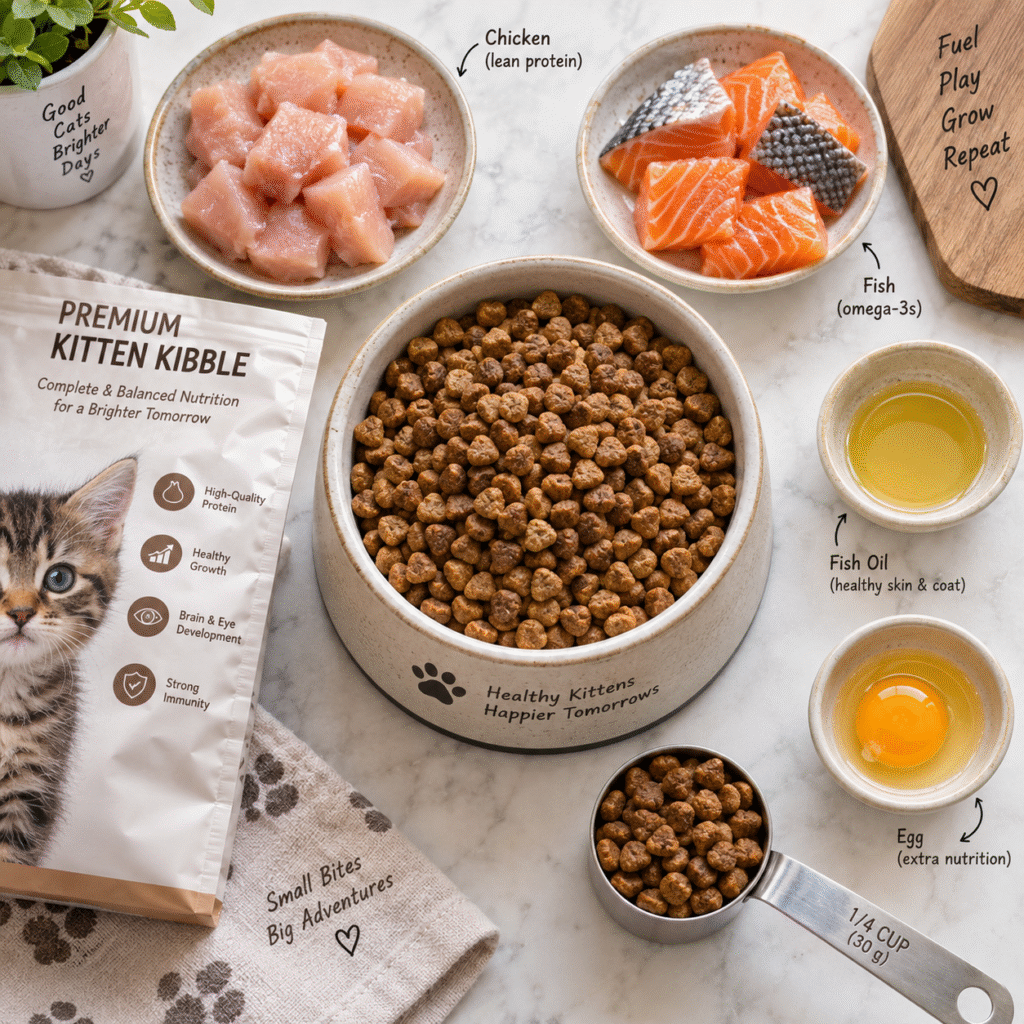
Now let’s get into the good stuff. When you’re standing in the pet food aisle feeling overwhelmed by choices, here are the 7 things to check for.
1. High-Quality Animal Protein
Cats are natural carnivores, and kittens need even more protein than adult cats to build strong muscles. Look for kitten food where the first ingredient is a named animal protein, like chicken, turkey, or fish. Avoid foods that are vague about their protein source or rely mostly on fillers.
Protein isn’t just about muscle. It also supports healthy skin, a shiny coat, and a strong immune system. This is the foundation of the best kitten food for healthy growth, so don’t skip checking this one.
2. DHA for Brain and Eye Development
DHA is a type of fatty acid that plays a huge role in brain and eye development. It’s especially important in the first few months of a kitten’s life. Many good kitten foods include DHA, often sourced from fish oil.
Kittens with enough DHA in their diet tend to be sharper, more alert, and better at learning basic skills like using the litter tray or responding to their name. It’s a small ingredient with a big impact.
3. Calcium and Phosphorus for Strong Bones
Kittens grow incredibly fast. In just a few months, they go from fitting in your palm to jumping onto kitchen counters. This kind of growth needs strong, healthy bones, and that means calcium and phosphorus need to be present in the right balance.
Too little of either can lead to weak bones. Too much, or the wrong ratio, can also cause problems. This is why it’s best to choose food made specifically for kittens rather than trying to guess the right amounts yourself with homemade meals.
4. Healthy Fats for Energy
Kittens are basically tiny bundles of energy. They run, jump, pounce, and play for hours, then crash into a deep sleep. All that activity needs fuel, and healthy fats are a big part of that fuel source.
Good kitten food includes fats from sources like fish oil or chicken fat. These fats also help kittens absorb important vitamins and keep their skin and coat looking healthy and soft.
5. Taurine, an Amino Acid Cats Cannot Live Without
Taurine is an amino acid that cats cannot produce enough of on their own, so it must come from their food. It’s essential for healthy heart function and good eyesight. A lack of taurine can lead to serious health issues over time.
Almost all quality kitten foods include taurine, but it’s still worth checking the label, especially if you’re trying a smaller or lesser-known brand.
6. Easily Digestible Ingredients
A kitten’s digestive system is still developing and can be sensitive. The best kitten food for healthy growth uses ingredients that are gentle on the stomach and easy to digest. This helps kittens actually absorb the nutrients they need, rather than the food passing through without doing much good.
Signs that a food might not agree with your kitten include soft stools, excessive gas, or vomiting after meals. If you notice these signs, it might be worth switching to a different formula.
7. Small Kibble Size or Wet Food Texture
This one sounds simple, but it matters a lot. Kittens have tiny mouths and small, developing teeth. Regular adult cat kibble can be too big or too hard for them to chew comfortably.
Look for kitten food with small kibble pieces designed for little jaws, or offer wet food, which is softer and often easier for young kittens to eat, especially during the weaning stage.
Wet Food, Dry Food, or Both?
A common question is whether kittens should eat wet food, dry food, or a mix of both. The honest answer is that both can work well, as long as they’re specifically made for kittens.
Wet food tends to have more moisture, which supports hydration and can be gentler on young digestive systems. Dry food is convenient, often more affordable, and can support dental health as kittens get older. Many vets recommend a mix of both, giving kittens the benefits of each while keeping mealtimes interesting.
How Often Should You Feed a Kitten?
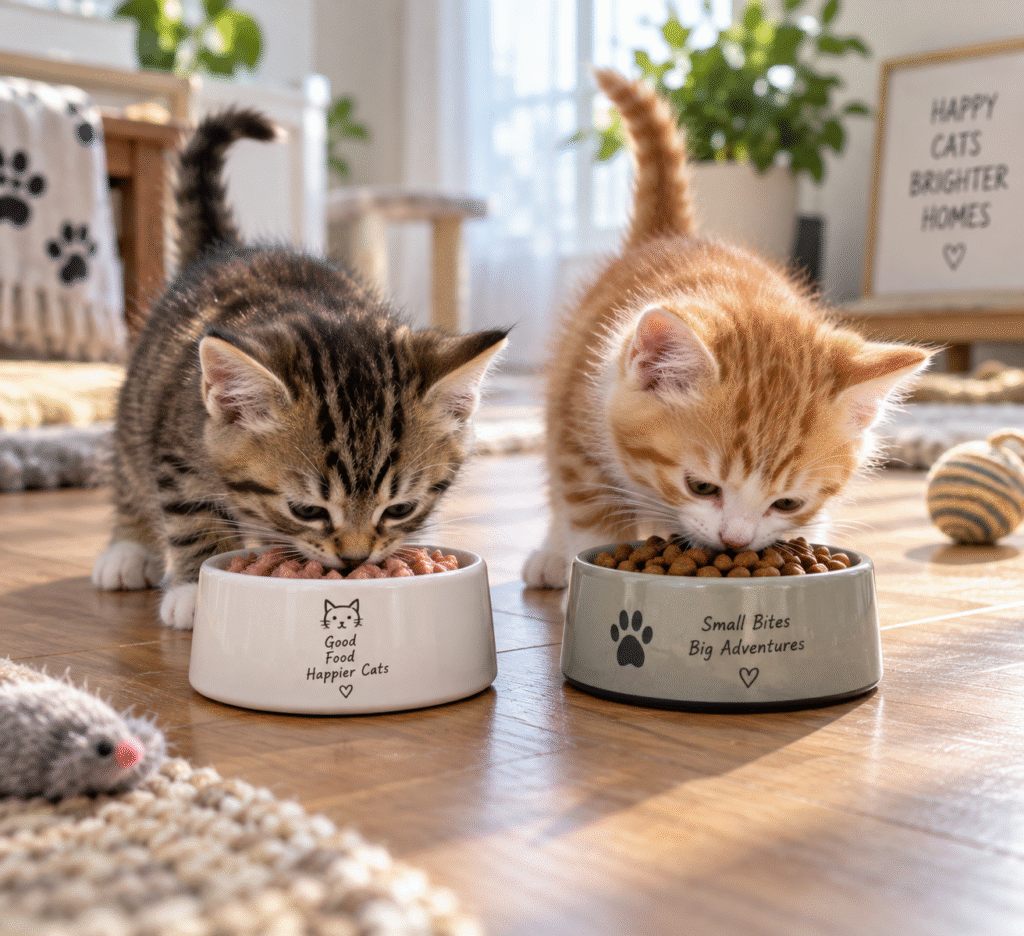
Kittens have small stomachs but big energy needs, so they do best with several small meals throughout the day rather than one or two large ones. Very young kittens may need four meals a day, gradually reducing to two or three meals as they approach their first birthday.
Always follow the feeding guidelines on the food packaging as a starting point, then adjust based on your kitten’s body condition and your vet’s advice.
A Quick Word on Transitioning Foods
If you’re switching your kitten from one food to another, do it slowly. A sudden change can upset their stomach. Mix a small amount of the new food with the old food, gradually increasing the new food over about a week until the switch is complete.
Final Thoughts
Choosing the best kitten food for healthy growth doesn’t have to be complicated. Focus on real animal protein, DHA, the right balance of calcium and phosphorus, healthy fats, taurine, easy digestibility, and a texture your kitten can actually eat comfortably. Get these 7 essentials right, and you’re giving your kitten the best possible start in life.
Every kitten is different, so if you’re ever unsure, a quick chat with your vet can help you pick the perfect food for your growing companion. Here’s to happy, healthy growing up for your new furry friend.