
Bringing your kitten home is the easy part. The first week is where the real settling in happens, and it rarely goes in a straight line.
Some kittens explore confidently within hours. Others hide under the sofa for two days straight. Both are completely normal.
This day by day guide walks you through what to expect and what to do, from the moment you walk through the door to the end of week one.
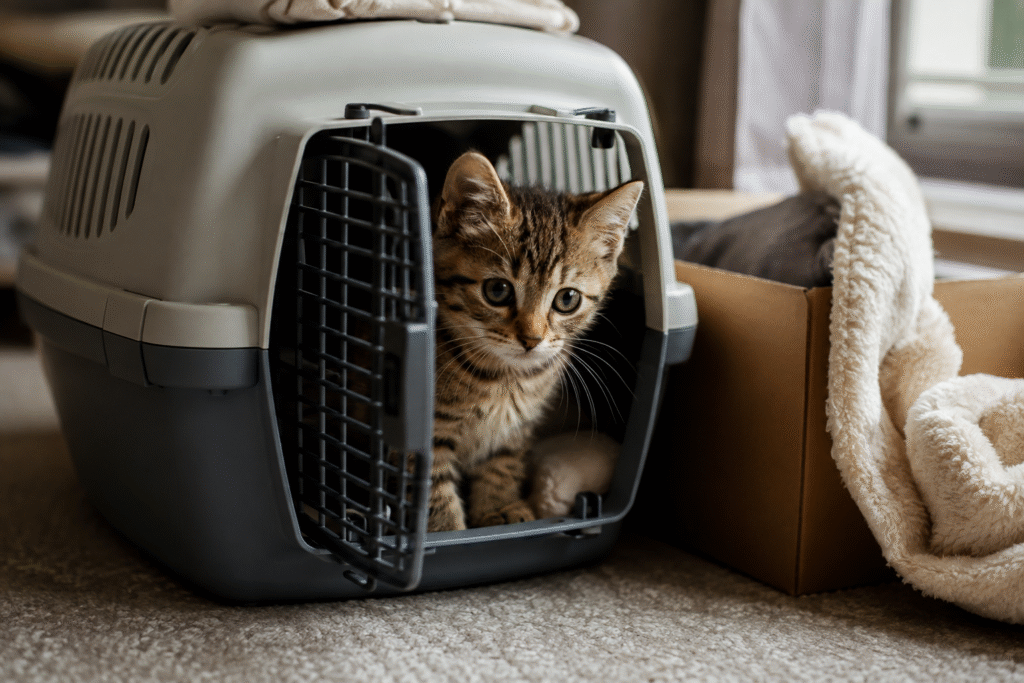
Day 1: Arrival Day
Keep today boring, on purpose. Bring your kitten straight into the one room you’ve set up as their safe space, not a full tour of the house.
Set up their litter tray, food, water, and a hiding spot before you even bring them inside, so nothing is missing when they arrive.
For help choosing what to put in the bowl, see our guide to the best kitten food.
Let them come out of the carrier in their own time. Some kittens bolt straight for a hiding spot, and that’s fine, don’t pull them out for a cuddle.
Skip introducing them to other pets or excited children today. Quiet beats exciting on day one, every time.
Kitten Care in the First Week: Days 2 to 3
By now, most kittens start exploring the room a bit more, especially at night when things are quiet.
Keep feeding times consistent. A predictable routine does more for a nervous kitten than constant attention does.
Watch for their first proper use of the litter tray. If they’re struggling with it, our guide to litter training a kitten in 5 simple steps covers exactly what to check.
Accidents happen this early, and they’re not a sign anything’s wrong. Clean them up with an enzymatic cleaner rather than a standard household spray. Regular cleaners don’t fully remove the scent, which can actually encourage repeat accidents in the same spot.

Days 4 to 5: Widening the World
Once your kitten seems relaxed in their safe room, typically by day 4 or 5, you can start opening the door to one more room at a time.
Start short, calm handling sessions now if you haven’t already. A few minutes of gentle stroking and holding gets them used to touch, which pays off later at the vet and at nail trims.
A soft grooming brush is a gentle way to build this habit. Most kittens enjoy it more than a cuddle session.
If your kitten still seems anxious by this point, a calming pheromone diffuser in their room can genuinely take the edge off. It’s not a fix for everything, but it helps more kittens settle than you’d expect.

Settling In: Kitten Care, Days 6 to 7
By the end of the week, most kittens are eating well, using the litter tray reliably, and showing real personality.
This is a good point to introduce a proper play routine. Short bursts of play, a few times a day, burn off energy and build confidence faster than just leaving toys out for them.
Our guide to the best interactive cat toys is a good place to start if you haven’t picked anything up yet.
If you have other pets, this is usually the earliest sensible point to start slow, supervised introductions. Never rush this part.

When to Call the Vet
Most of what feels alarming in week one is completely normal. But call your vet straight away if your kitten refuses food for more than 24 hours, seems unusually lethargic, or has ongoing diarrhoea or vomiting.
If you haven’t already, book their first check up now. The PDSA has a clear overview of what a first kitten vet visit usually covers, if you want to know what to expect.
Final Thoughts
There’s no single timeline that fits every kitten. Some are confident by day 3, others take a couple of weeks to really settle in, and both are fine.
Stay consistent, keep things calm, and let your kitten set the pace. The rest tends to follow on its own.